

403 FOOD PRODUCTION AND PATISSERIE ‐ III
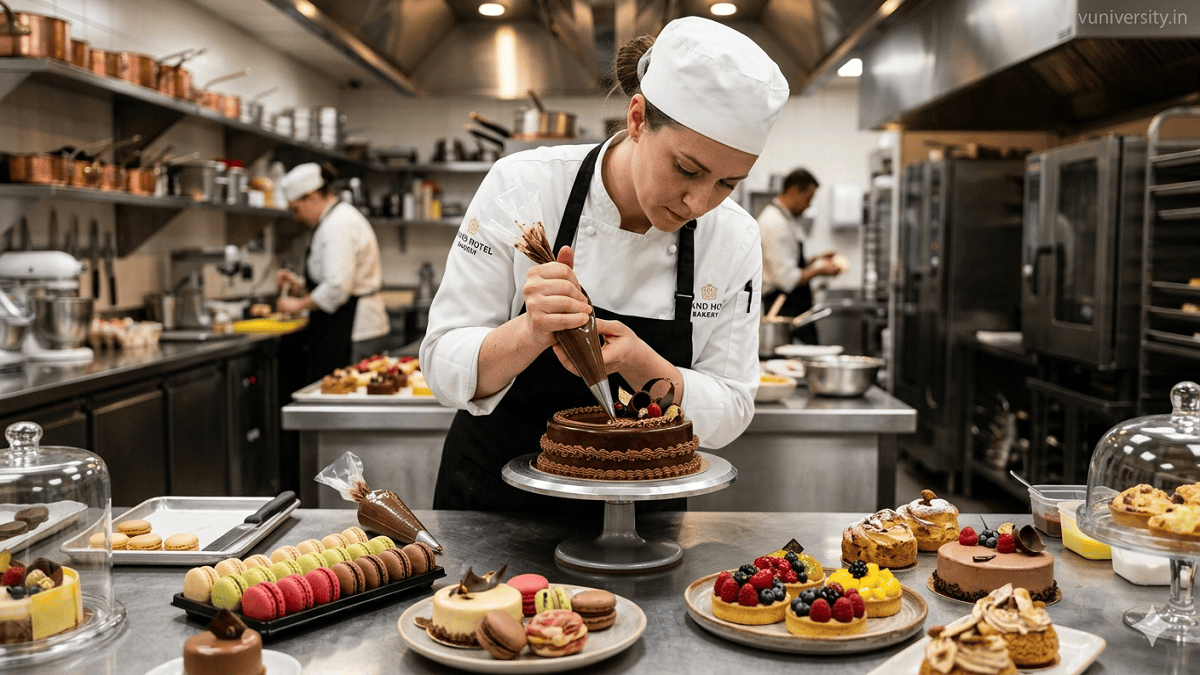
Food Production and Patisserie – III is an advanced-level subject designed to strengthen professional culinary competencies and prepare students for careers in the hospitality and food service industry. Building upon the foundations of food preparation, bakery operations, and kitchen management, this course focuses on refining technical skills, enhancing creativity, and developing a deeper understanding of international culinary practices.
A key objective of Food Production and Patisserie – III is to introduce students to advanced cooking methods and specialized food production techniques. Learners gain practical exposure to menu planning, quantity food production, and the preparation of regional and international cuisines. Emphasis is placed on maintaining consistency, quality standards, and food safety throughout the production process. Knowledge of hygiene and food safety practices is critical in professional kitchens, and guidelines provided by organizations such as the World Health Organization (WHO) help establish globally recognized food safety standards.
The patisserie component of the course focuses on advanced baking and confectionery techniques. Students learn the preparation of artisan breads, cakes, pastries, desserts, chocolates, and plated sweets. Attention is given to ingredient functionality, recipe standardization, and presentation skills. Modern pastry professionals are expected to balance creativity with precision, making technical accuracy a fundamental aspect of training.
Another important area covered in Food Production and Patisserie – III is kitchen organization and operational management. Students are introduced to concepts such as workflow planning, inventory control, cost management, and waste reduction. Understanding these operational aspects enables future chefs and pastry professionals to contribute effectively to commercial kitchens, hotels, restaurants, and bakery establishments. Industry best practices and professional culinary standards are promoted by institutions such as the Culinary Institute of America, which serves as a valuable resource for culinary education and innovation.
The course also encourages creativity and innovation in food presentation. Modern consumers increasingly value visually appealing dishes and unique dining experiences. Therefore, students are trained to apply contemporary plating techniques, artistic dessert presentation, and menu development strategies that align with changing market trends. Exposure to global culinary influences helps learners understand diverse food cultures and customer preferences.
Career opportunities for students completing Food Production and Patisserie – III are extensive. Graduates may pursue roles such as commis chef, pastry chef, bakery specialist, food production supervisor, catering professional, or entrepreneur in the bakery and confectionery sector. Additional professional development can be achieved through certifications and training programs offered by organizations such as the World Association of Chefs’ Societies (Worldchefs).
In conclusion, Food Production and Patisserie – III plays a vital role in developing advanced culinary and pastry skills. By combining technical expertise, operational knowledge, food safety awareness, and creative presentation techniques, the course prepares students to meet the demands of the modern hospitality industry and build successful careers in professional food production and patisserie.
#HotelManagement
What is the main focus of Food Production and Patisserie – III?
The main focus of Food Production and Patisserie – III is to develop advanced culinary and bakery skills required in the professional hospitality industry. The course builds upon foundational knowledge and emphasizes advanced food preparation techniques, pastry and bakery production, kitchen management, food safety, and creative presentation.
Students learn to prepare a variety of regional and international dishes, artisan breads, cakes, pastries, desserts, and confectionery products while maintaining high standards of quality and hygiene. The subject also introduces important operational aspects such as menu planning, cost control, inventory management, and efficient kitchen organization.
In addition to technical skills, Food Production and Patisserie – III encourages creativity and innovation in food presentation, helping students meet modern consumer expectations and industry trends. Through practical training and theoretical knowledge, the course prepares learners for professional roles in hotels, restaurants, bakeries, catering services, and other food service establishments.
Overall, the primary objective of Food Production and Patisserie – III is to equip students with the advanced culinary expertise, pastry-making proficiency, and management skills necessary for successful careers in the food and hospitality sector.
#BakingAndPastry
What are the key principles of advanced bakery and patisserie production?
Advanced bakery and patisserie production is based on a combination of technical precision, creativity, consistency, and quality control. These principles ensure that baked goods and confectionery products meet professional standards in terms of taste, texture, appearance, and food safety.
1. Ingredient Knowledge and Functionality
A thorough understanding of ingredients is essential in advanced bakery and patisserie production. Bakers and pastry chefs must know how flour, sugar, fats, eggs, yeast, and leavening agents interact during the baking process. Proper ingredient selection directly affects the texture, flavor, structure, and shelf life of the final product.
2. Accuracy and Measurement
Precision is one of the most important principles in baking. Unlike many cooking methods, bakery and patisserie production rely on exact measurements and controlled procedures. Even minor variations in ingredient quantities can significantly impact product quality and consistency.
3. Temperature and Time Control
Maintaining appropriate temperatures during mixing, proofing, baking, cooling, and storage is critical. Temperature affects yeast activity, dough development, chocolate tempering, and the texture of pastries and desserts. Proper timing ensures optimal product quality and prevents underbaking or overbaking.
4. Standardization and Consistency
Professional bakeries require consistent results across all batches. Standardized recipes, production methods, and quality checks help maintain uniformity in flavor, appearance, portion size, and texture. Consistency is essential for customer satisfaction and brand reputation.
5. Hygiene and Food Safety
Strict hygiene practices are fundamental in bakery and patisserie operations. Personal cleanliness, proper food handling, equipment sanitation, and safe storage procedures help prevent contamination and ensure consumer safety. Adherence to food safety regulations is a key responsibility of bakery professionals.
6. Product Presentation and Aesthetics
Visual appeal plays a major role in the success of bakery and pastry products. Advanced patisserie emphasizes artistic decoration, precise finishing techniques, elegant plating, and creative design. Attractive presentation enhances customer perception and adds value to the product.
7. Quality Control
Continuous monitoring of ingredients, production processes, and finished products ensures high-quality standards. Quality control involves checking texture, flavor, color, volume, freshness, and overall appearance before products are served or sold.
8. Creativity and Innovation
Modern consumers seek unique flavors and visually appealing creations. Advanced bakery and patisserie production encourages experimentation with ingredients, techniques, and presentation styles while maintaining professional standards and product integrity.
Conclusion
The key principles of advanced bakery and patisserie production include ingredient knowledge, precision, temperature control, consistency, food safety, quality management, presentation, and innovation. Mastering these principles enables bakery and pastry professionals to produce high-quality products that meet industry standards and customer expectations.
#FoodSafety
Why is food hygiene important in patisserie operations?
Food hygiene is a critical aspect of patisserie operations because it ensures the safety, quality, and integrity of bakery and confectionery products. Since pastries, cakes, desserts, creams, and fillings often contain perishable ingredients such as milk, eggs, cream, and fresh fruits, maintaining strict hygiene standards is essential to prevent contamination and foodborne illnesses.
One of the primary reasons food hygiene is important is to protect consumer health. Harmful bacteria, viruses, and other microorganisms can contaminate food if proper hygiene practices are not followed. Poor handling, inadequate storage, or unclean equipment can lead to food poisoning, which may cause serious health problems for customers. By maintaining high standards of cleanliness, patisserie professionals can significantly reduce these risks.
Food hygiene also helps preserve product quality and freshness. Proper storage temperatures, clean work surfaces, and hygienic preparation methods ensure that pastries and desserts retain their intended flavor, texture, and appearance. Contaminated or improperly stored ingredients can negatively affect the quality of finished products and lead to spoilage, resulting in financial losses for the business.
Another important aspect is compliance with food safety regulations and industry standards. Bakeries, hotels, restaurants, and pastry shops are required to follow established food safety guidelines to operate legally and responsibly. Adhering to hygiene regulations demonstrates professionalism and helps businesses avoid penalties, legal issues, and reputational damage.
Maintaining food hygiene also enhances customer trust and satisfaction. Consumers expect bakery and pastry products to be safe, fresh, and prepared in a clean environment. Consistently following hygiene practices helps build a positive reputation, encourages repeat business, and strengthens customer confidence in the establishment.
Personal hygiene is equally important in patisserie operations. Employees must wash their hands regularly, wear clean uniforms, use protective clothing when necessary, and avoid practices that may contaminate food. Proper sanitation of utensils, baking equipment, and preparation areas further reduces the risk of cross-contamination.
Food hygiene additionally contributes to efficient kitchen operations by minimizing waste and reducing the likelihood of product recalls or customer complaints. Clean and organized work environments support productivity and help maintain consistent quality standards throughout the production process.
In conclusion, food hygiene is essential in patisserie operations because it protects consumer health, ensures product quality, supports legal compliance, enhances customer trust, and promotes efficient business operations. By following strict hygiene and sanitation practices, pastry professionals can produce safe, high-quality products while maintaining the highest standards of professionalism in the food industry.
#HospitalityEducation
What skills are required for preparing desserts and baked products?
Preparing desserts and baked products requires a combination of technical knowledge, creativity, precision, and attention to detail. These skills help pastry chefs and bakers produce high-quality items that meet professional standards for taste, texture, appearance, and consistency.
1. Knowledge of Ingredients
A strong understanding of ingredients is essential in baking and dessert preparation. Bakers must know how flour, sugar, eggs, butter, milk, chocolate, and leavening agents function in recipes. Understanding ingredient properties helps achieve the desired texture, flavor, and structure of the final product.
2. Measuring and Accuracy
Precision is one of the most important skills in baking. Unlike general cooking, baking relies on exact measurements and ratios. Accurate weighing and measuring of ingredients ensure consistency and prevent product failures.
3. Mixing and Dough Handling Techniques
Professional bakers must be skilled in various mixing methods and dough-handling techniques. Proper kneading, folding, whipping, and blending contribute to the correct texture and quality of cakes, breads, pastries, and cookies.
4. Baking and Temperature Control
Understanding oven temperatures, baking times, and heat distribution is crucial. Bakers need to monitor products carefully to ensure they are baked evenly and achieve the desired color, texture, and flavor without being undercooked or overcooked.
5. Decorating and Presentation Skills
Desserts and baked products should be visually appealing. Skills such as cake decoration, icing, piping, glazing, chocolate work, and dessert plating help enhance product presentation and create attractive finished products that appeal to customers.
6. Creativity and Innovation
Creativity is important for developing unique desserts, flavor combinations, and decorative designs. Modern pastry professionals often experiment with ingredients, textures, and presentation styles to meet changing consumer preferences and industry trends.
7. Time Management and Organization
Preparing multiple products simultaneously requires excellent time-management skills. Bakers and pastry chefs must organize tasks efficiently, follow production schedules, and coordinate preparation, baking, cooling, and decorating processes.
8. Hygiene and Food Safety Awareness
Maintaining cleanliness and following food safety procedures are essential skills in dessert and bakery production. Proper handling, storage, and sanitation practices help prevent contamination and ensure product safety and quality.
9. Attention to Detail
Successful baking requires careful observation and consistency. Small errors in measurements, mixing, baking times, or decoration can affect the final product. Attention to detail helps maintain professional standards and customer satisfaction.
Conclusion
Preparing desserts and baked products requires a blend of technical expertise, accuracy, creativity, organization, and food safety awareness. By mastering these skills, bakers and pastry professionals can consistently produce high-quality desserts and baked goods that satisfy customer expectations and meet industry standards.
#PastryChef
How does presentation enhance the quality of patisserie items?
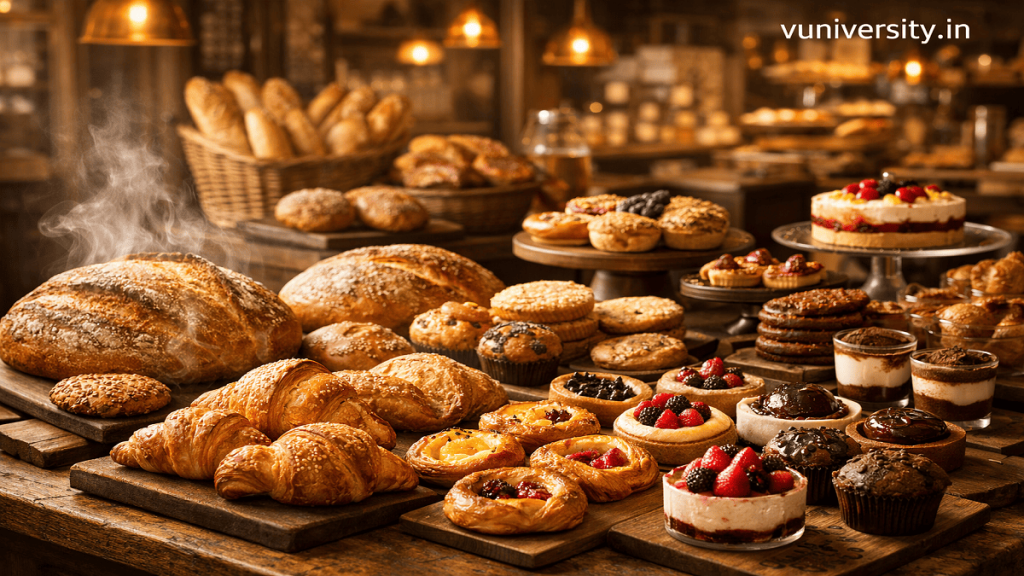
Presentation plays a vital role in enhancing the quality and appeal of patisserie items. In the pastry and confectionery industry, customers often judge a product by its appearance before tasting it. An attractive presentation creates a positive first impression and increases the perceived value of desserts, cakes, pastries, and other baked products.
One of the main benefits of good presentation is that it improves visual appeal. Carefully arranged desserts, elegant garnishes, smooth finishes, and creative decorations make products more attractive and inviting. A well-presented pastry immediately captures the customer’s attention and stimulates interest in tasting the product.
Presentation also reflects the skill, professionalism, and creativity of the pastry chef. Techniques such as piping, glazing, chocolate decoration, sugar artistry, and artistic plating demonstrate technical expertise and attention to detail. These elements help distinguish premium patisserie products from ordinary baked goods and contribute to a memorable dining experience.
Another important aspect is that presentation enhances the perceived quality of a product. Customers often associate attractive desserts with better taste, freshness, and higher standards of preparation. Even when two products have similar ingredients and flavors, the one with superior presentation is generally viewed as more desirable and valuable.
Effective presentation helps highlight key features of a dessert. Color combinations, textures, shapes, and decorative elements can emphasize the uniqueness of a product and make it more appealing. Balanced presentation creates harmony between visual aesthetics and the product’s intended theme or flavor profile.
Presentation is also important for marketing and customer satisfaction. In today’s digital age, visually appealing desserts are frequently shared on social media platforms, helping businesses attract new customers and increase brand visibility. Beautifully presented patisserie items can enhance a bakery’s reputation and encourage repeat purchases.
Furthermore, proper presentation demonstrates attention to hygiene and quality control. Clean plating, neat finishing, and organized displays indicate that products have been prepared and handled with care. This builds customer confidence and trust in the establishment.
In professional patisserie operations, presentation is considered an essential component of the overall product experience. It complements flavor, texture, and aroma by creating a visually satisfying product that meets customer expectations and industry standards.
Conclusion
Presentation enhances the quality of patisserie items by improving visual appeal, increasing perceived value, showcasing professional skills, supporting marketing efforts, and enhancing customer satisfaction. A well-presented dessert not only looks attractive but also contributes significantly to the overall dining experience, making presentation a key element of successful patisserie production.
#BakerySkills
Case Study of 403 FOOD PRODUCTION AND PATISSERIE ‐ III
Introduction
Food Production and Patisserie – III focuses on advanced culinary techniques, bakery production, food safety, kitchen management, and creative presentation. This case study examines how a hospitality institute’s training kitchen successfully organized a dessert and bakery production project, allowing students to apply theoretical knowledge in a practical environment.
Background
A hospitality training institute assigned final-year students a project to prepare a premium dessert buffet for a mock hotel event. The objective was to demonstrate advanced bakery and patisserie skills while maintaining professional standards of hygiene, quality, and presentation. Students were required to produce a variety of desserts, including cakes, pastries, mousse, tarts, cookies, and artisan breads.
Challenges
During the planning stage, students faced several challenges:
- Managing production within a limited time frame.
- Ensuring consistency in taste, texture, and appearance.
- Maintaining food safety and hygiene standards.
- Coordinating multiple preparation tasks simultaneously.
- Minimizing ingredient wastage and controlling production costs.
The project required students to work as a professional pastry team and follow industry-standard operating procedures.
Implementation
The students began by planning the menu and preparing standardized recipes. Ingredients were measured accurately to ensure consistency across all products. Production schedules were developed to organize mixing, baking, cooling, decorating, and plating activities efficiently.
Food hygiene practices were strictly followed throughout the process. Students wore clean uniforms, sanitized equipment, maintained proper storage temperatures, and practiced safe food handling techniques.
Advanced patisserie skills were demonstrated through:
- Chocolate decorations and garnishes.
- Cake icing and fondant work.
- Preparation of fruit tarts and mousse desserts.
- Artisan bread production using controlled fermentation techniques.
- Creative dessert plating and buffet presentation.
Quality checks were conducted at every stage to evaluate flavor, texture, appearance, and portion consistency.
Results
The dessert buffet was completed successfully and received positive feedback from faculty members and industry evaluators. The products met professional standards in terms of taste, presentation, and hygiene.
Key outcomes included:
- Improved practical baking and pastry skills.
- Better understanding of production planning and teamwork.
- Enhanced creativity in dessert presentation.
- Successful implementation of food safety procedures.
- Reduced ingredient wastage through proper inventory management.
The project demonstrated how effective planning and technical expertise contribute to successful bakery and patisserie operations.
Lessons Learned
The case study highlighted several important lessons:
- Accurate measurements are essential for product consistency.
- Food hygiene directly impacts product quality and customer safety.
- Team coordination improves production efficiency.
- Presentation significantly influences customer perception.
- Standardized recipes help maintain quality control.
Conclusion
This case study illustrates the practical application of concepts taught in Food Production and Patisserie – III. Through advanced baking techniques, food safety practices, production management, and creative presentation, students developed the professional skills required in the hospitality industry. The project successfully demonstrated the importance of precision, teamwork, hygiene, and innovation in modern food production and patisserie operations.
#CulinaryArts
White Paper on Food Production and Patisserie – III
Executive Summary
Food Production and Patisserie – III is an advanced-level course designed to equip students with the technical, managerial, and creative skills required in the modern hospitality and food service industry. The course emphasizes advanced culinary techniques, bakery and confectionery production, food safety practices, kitchen operations, cost control, and innovative food presentation. This white paper examines the significance of the course, its learning objectives, industry relevance, challenges, and future opportunities within the culinary and patisserie sectors.
Introduction
The hospitality industry has experienced significant growth due to increasing consumer demand for quality food products, fine dining experiences, and specialty bakery items. As a result, there is a growing need for skilled professionals who can efficiently manage food production while maintaining high standards of quality and safety. Food Production and Patisserie – III addresses these requirements by providing comprehensive training in advanced culinary and pastry arts.
Course Objectives
The primary objectives of Food Production and Patisserie – III include:
- Developing advanced cooking and baking competencies.
- Understanding ingredient functionality and recipe standardization.
- Applying food safety and hygiene principles.
- Enhancing creativity in dessert preparation and presentation.
- Learning kitchen management and operational control.
- Improving teamwork, communication, and professional discipline.
These objectives prepare students for real-world challenges in hotels, restaurants, bakeries, catering establishments, and food production units.
Key Areas of Study
Advanced Food Production
Students gain expertise in international cuisines, advanced cooking methods, menu planning, and quantity food production. Emphasis is placed on maintaining consistency, quality, and efficiency in food preparation.
Bakery and Patisserie Operations
The course covers the production of cakes, pastries, breads, cookies, desserts, chocolates, and confectionery products. Learners develop skills in dough preparation, fermentation, baking science, decoration, and dessert plating.
Food Safety and Hygiene
Food safety is a fundamental component of professional food production. Students learn proper sanitation practices, contamination prevention, storage procedures, and compliance with food safety regulations to ensure consumer protection.
Kitchen Management
Effective kitchen operations require knowledge of inventory management, cost control, procurement, workflow planning, and waste reduction strategies. These managerial skills contribute to operational efficiency and profitability.
Industry Relevance
The global hospitality industry increasingly demands professionals with both technical and managerial competencies. Modern consumers expect high-quality food products, innovative menus, and visually appealing presentations. Food Production and Patisserie – III aligns with these expectations by integrating practical skills with industry best practices.
Graduates of this course can pursue careers as:
- Commis Chef
- Pastry Chef
- Bakery Specialist
- Food Production Supervisor
- Catering Executive
- Entrepreneur in Bakery and Confectionery Businesses
Challenges in Modern Food Production
Despite technological advancements, food production professionals face several challenges:
- Maintaining consistent product quality.
- Adhering to strict food safety regulations.
- Managing rising ingredient costs.
- Reducing food waste and promoting sustainability.
- Meeting evolving consumer preferences.
The course prepares students to address these challenges through structured training and practical experience.
Future Trends
Emerging trends influencing food production and patisserie include:
- Sustainable and eco-friendly production practices.
- Health-conscious and specialty bakery products.
- Digital kitchen management systems.
- Fusion cuisine and innovative dessert concepts.
- Advanced food presentation techniques.
- Automation and smart baking technologies.
Professionals who adapt to these trends will remain competitive in the evolving hospitality sector.
Recommendations
To enhance learning outcomes, educational institutions should:
- Increase industry-oriented practical training.
- Incorporate modern culinary technologies.
- Strengthen food safety certification programs.
- Promote innovation and entrepreneurship.
- Encourage sustainable production practices.
Conclusion
Food Production and Patisserie – III serves as a critical bridge between academic learning and professional culinary practice. By combining advanced food production techniques, bakery expertise, food safety knowledge, operational management, and creative presentation skills, the course prepares students for successful careers in the hospitality industry. As the food service sector continues to evolve, the competencies developed through this course will remain essential for achieving excellence in food production and patisserie operations.
#Patisserie
Industry Application of Food Production and Patisserie – III
Introduction
Food Production and Patisserie – III plays a significant role in preparing students for professional careers in the hospitality and food service industry. The course provides advanced knowledge and practical skills in culinary arts, bakery production, food safety, kitchen management, and dessert preparation. These competencies are directly applicable to various sectors, including hotels, restaurants, bakeries, catering services, cruise lines, and food manufacturing companies.
Application in the Hotel Industry
Hotels require highly skilled food production professionals to maintain quality standards and meet diverse customer expectations. The advanced cooking techniques taught in Food Production and Patisserie – III enable graduates to work efficiently in hotel kitchens, preparing international cuisines, specialty dishes, and premium desserts.
Pastry chefs and bakery specialists contribute to hotel operations by producing cakes, pastries, breads, and confectionery products for restaurants, banquets, and special events. Knowledge of menu planning and quantity food production helps ensure consistency and customer satisfaction.
Application in Restaurants
Restaurants depend on skilled culinary professionals to create high-quality dining experiences. The course equips students with expertise in food preparation, presentation, portion control, and quality management. Advanced plating techniques and creative menu development allow restaurants to offer visually appealing and innovative dishes that attract customers.
Food safety practices learned during the course help restaurants comply with health regulations and maintain consumer confidence.
Application in Bakeries and Patisseries
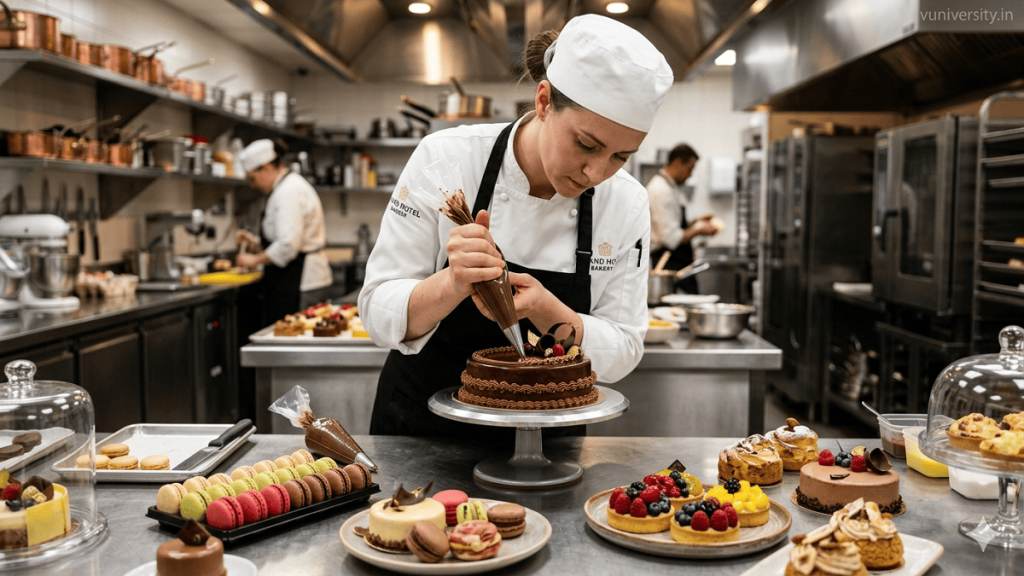
The bakery and patisserie sector is one of the primary beneficiaries of this course. Students develop skills in bread making, cake production, pastry preparation, chocolate work, and dessert decoration. These competencies are essential for producing premium bakery products that meet commercial quality standards.
Professional bakers and pastry chefs use recipe standardization, quality control procedures, and innovative product development techniques to ensure consistency and profitability.
Application in Catering Services
Large-scale catering operations require expertise in quantity food production, menu planning, logistics, and service coordination. Graduates can apply their knowledge to prepare meals and desserts for weddings, corporate functions, conferences, and social events.
The course also emphasizes efficient resource utilization, cost management, and waste reduction, which are crucial for successful catering operations.
Application in Food Manufacturing
Food manufacturing companies employ professionals with culinary and bakery expertise to develop and improve food products. Skills acquired in ingredient functionality, product testing, quality assurance, and process standardization support large-scale food production and innovation.
Professionals may contribute to research and development activities, helping companies create new bakery and confectionery products that align with market trends.
Application in Entrepreneurship
Food Production and Patisserie – III encourages entrepreneurial thinking by providing knowledge of production planning, inventory management, and cost control. Graduates can establish their own bakeries, pastry shops, catering businesses, cloud kitchens, or specialty food ventures.
The ability to combine technical expertise with business management skills enhances the likelihood of entrepreneurial success.
Benefits to the Industry
The course benefits the hospitality industry by producing professionals who:
- Maintain high standards of food quality and safety.
- Demonstrate advanced culinary and baking skills.
- Adapt to changing consumer preferences.
- Contribute to innovation and menu development.
- Improve operational efficiency and cost management.
- Support sustainable food production practices.
Conclusion
Food Production and Patisserie – III has extensive industry applications across hotels, restaurants, bakeries, catering services, food manufacturing companies, and entrepreneurial ventures. By developing advanced culinary, bakery, management, and food safety skills, the course prepares students to meet the evolving demands of the hospitality industry and contribute effectively to professional food production operations.
#FoodProduction
Ask FAQs
What is the objective of Food Production and Patisserie – III?
The primary objective of Food Production and Patisserie – III is to develop advanced culinary and bakery skills, enabling students to prepare high-quality food and pastry products while understanding kitchen operations, food safety, and professional presentation techniques.
What topics are covered in Food Production and Patisserie – III?
The course covers advanced cooking methods, bakery and confectionery production, dessert preparation, food hygiene, menu planning, kitchen management, cost control, and creative food presentation.
Why is food safety important in food production and patisserie operations?
Food safety is essential because it helps prevent contamination, ensures customer health, maintains product quality, and enables compliance with industry regulations and professional standards.
What career opportunities are available after studying Food Production and Patisserie – III?
Students can pursue careers as chefs, pastry chefs, bakers, food production supervisors, catering professionals, bakery entrepreneurs, and hospitality industry specialists in hotels, restaurants, and food service organizations.
How does Food Production and Patisserie – III contribute to industry readiness?
The course combines practical training with theoretical knowledge, helping students develop technical expertise, teamwork, time management, creativity, and operational skills required in professional food production and hospitality environments.
Source: Patkar Hospitality
Table of Contents
Disclaimer: This content is intended for educational and informational purposes only. The information provided may vary based on institutional curricula, industry standards, and regional regulations. Readers should consult official course materials and industry guidelines for the most accurate and up-to-date information.