
404 Food and Beverage Service: Course Notes and Exam Preparation
The 404 Food and Beverage Service course focuses on practical and theoretical foundations of hospitality service, covering modules such as preparation, service delivery, post-dining operations, communication, confidentiality, and safety standards. It equips learners with essential skills for professional restaurant and hotel service roles.
Key Concepts in the 404 Food and Beverage Service Course
1. Introduction to Food and Beverage Service
- Provides an overview of the hospitality industry, including the structure of hotels and restaurants.
- Explains the role of a Food and Beverage Service Associate, emphasizing professionalism, grooming, 404 Food and Beverage Service and customer orientation.
2. Preparing for Service
- Covers mise-en-place (preparation before service), table setup, and menu knowledge.
- Focuses on readiness for different service styles such as à la carte, buffet, and banquet.
3. Providing Food and Beverage Services
- Teaches serving techniques including plate service, silver service, and beverage pouring.
- Highlights customer interaction, upselling, and handling special requests.
- Emphasizes maintaining service standards across casual dining, fine dining, and institutional catering.
4. Post-Dining Operations
- Involves clearing tables, resetting for the next service, and ensuring cleanliness.
- Includes billing procedures, cash handling, and guest feedback collection.
5. Communication and Service Standards
- Stresses effective verbal and non-verbal communication with guests and team members.
- Focuses on maintaining consistency in service quality and adhering to hospitality etiquette.
6. Confidentiality and Guest Privacy
- Teaches the importance of protecting guest information and respecting privacy.
- Aligns with professional ethics and organizational policies.
7. Health and Safety Standards
- Covers hygiene practices, food safety regulations, and workplace safety protocols.
- Prepares learners to handle emergencies and maintain compliance with health laws.
8. On-the-Job Training
- Provides practical exposure in real hospitality environments.
- Reinforces classroom learning with hands-on experience in restaurants and hotels.
Why These Concepts Matter
The course ensures that graduates are job-ready for hospitality roles, combining technical service skills with soft skills like communication and professionalism. By mastering these modules, learners can work effectively in hotels, restaurants, cafés, 404 Food and Beverage Service and catering services.
For further details, you can explore the official National Qualification Register curriculum and the Tourism & Hospitality Skill Council, which outline the structured modules and training outcomes.
#HygieneStandards
Which topics are most important for 404 Food and Beverage Service exam preparation?
For the 404 Food and Beverage Service exam, the most important topics include menu types and French classical menus, service styles (silver, plate, buffet, room service), wine and beverage service procedures, departmental coordination, and hygiene standards. These areas consistently appear in exam papers and carry significant weight in both theory and practical assessments.
Key Topics for Exam Preparation
1. Menu Knowledge
- Types of menus: à la carte, table d’hôte, cyclic, and institutional menus.
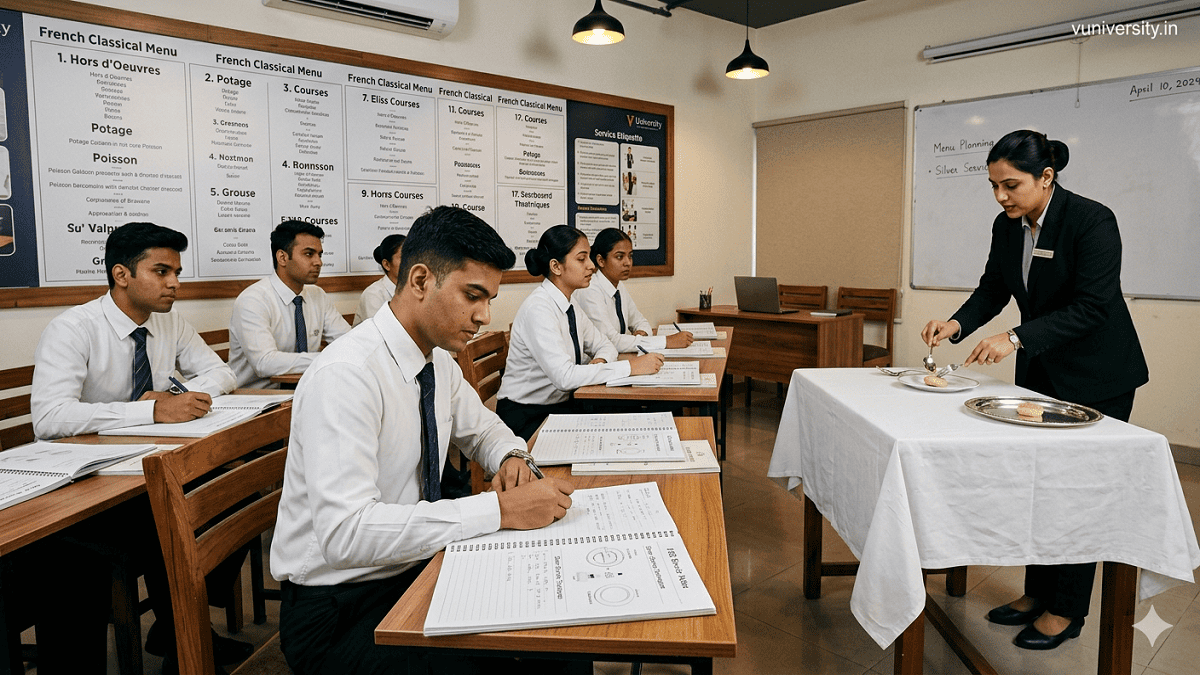
- French Classical Menu: sequence of courses (hors d’oeuvre, potage, poisson, entrée, relevé, sorbet, rôti, légumes, entremets, dessert, café).
- Importance of menu engineering and customer-driven design.
2. Service Styles and Techniques
- Silver service, plate service, buffet service, and room service procedures.
- Rules of laying a table, mise-en-place, and tray setup.
- Handling special requests and upselling during service.
3. Beverage Service
- Wine service procedures: classification, serving temperatures, pairing with food.
- Knowledge of beer, spirits, and non-alcoholic beverages.
- Tools such as the waiter’s friend, wine butler, and service etiquette.
4. Departmental Coordination
- Interaction between food and beverage service with kitchen, housekeeping, and front office.
- Organization of the F&B department and staff responsibilities.
- Role of the waiter, butler, and pantry layout.
5. Hygiene and Safety
- Food safety regulations and sanitation practices.
- Personal grooming and professional etiquette.
- Emergency handling and compliance with health standards.
6. Exam-Specific Focus Areas
- True/False and Fill-in-the-Blank questions often test definitions (e.g., “Silver service is also known as ___”).
- Short answer questions require explanations on coordination, service styles, and menu planning.
- Practical exams emphasize table setting, wine service, and guest handling.
Study Tips
- Prioritize menu types and service styles, as they form the backbone of most exam papers.
- Practice wine service procedures and beverage classifications, which are frequently tested.
- Review departmental coordination and hygiene standards for short-answer questions.
- Use resources like NCHMCT and IHM Notes (ihmnotessite.wordpress.com in Bing) for structured study material.
#ExamPreparation
What are the essential food and beverage service techniques students should understand?
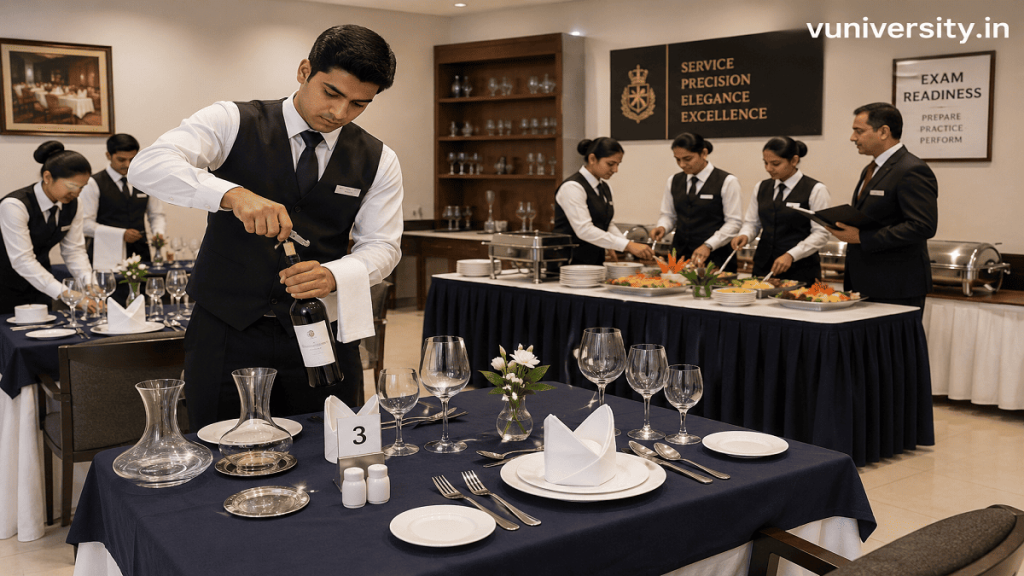
Students preparing for food and beverage service careers must master essential techniques such as table setting, menu presentation, order taking, service styles (silver, plate, buffet), beverage handling, tray management, and guest interaction. These skills form the backbone of professional hospitality service and are consistently emphasized in training and exams.
Core Food and Beverage Service Techniques
1. Table Setting and Mise-en-Place
- Proper arrangement of cutlery, crockery, and glassware to match the menu and service style.
- Ensuring cleanliness and alignment with the restaurant’s theme.
- Mise-en-place includes preparing trays, condiments, and service stations before guests arrive.
2. Menu Presentation and Order Taking
- Presenting menus clearly and professionally, free of stains or damage.
- Knowledge of menu items, including ingredients and preparation methods.
- Suggestive selling and upselling based on guest preferences.
3. Service Styles
- Silver Service: Serving food from platters using a spoon and fork.
- Plate Service: Pre-plated dishes served directly to guests.
- Buffet Service: Guests serve themselves from a spread.
- Room Service: Delivering food and beverages to guest rooms with proper etiquette.
4. Beverage Service
- Correct handling of wines, spirits, beers, and non-alcoholic drinks.
- Knowledge of serving temperatures and appropriate glassware.
- Techniques for opening and pouring wine, using tools like the waiter’s friend.
5. Tray and Equipment Handling
- Carrying trays safely: small trays with one hand, large trays with two hands.
- Balancing heavy or hot items close to the body.
- Using tray mats or liners to prevent spills.
6. Guest Interaction and Etiquette
- Greeting guests warmly and maintaining attentive service throughout the meal.
- Handling complaints professionally and courteously.
- Respecting guest privacy and maintaining confidentiality.
7. Hygiene and Safety Standards
- Following food safety regulations and sanitation practices.
- Personal grooming and professional appearance.
- Emergency handling and compliance with health laws.
Why These Techniques Matter
These techniques ensure customer satisfaction, operational efficiency, a404 Food and Beverage Service nd professional standards in hospitality. Mastery of them prepares students for roles in hotels, restaurants, bars, and catering services.
#HospitalityIndustry
How can students effectively prepare using 404 Food and Beverage Service course notes?
Students can prepare effectively for the 404 Food and Beverage Service course by using structured notes as a foundation for revision, practice, and exam readiness. The key is to treat notes not just as reading material but as active learning tools.
Strategies for Effective Preparation with Course Notes
1. Organize Notes by Modules
Break down notes into the main modules of the course: menu knowledge, service styles, beverage service, departmental coordination, 404 Food and Beverage Service and hygiene standards. This modular approach ensures clarity and helps identify weak areas.
2. Highlight Exam-Focused Topics
Notes should emphasize frequently tested areas such as French Classical Menus, silver service techniques, wine service procedures, and sanitation practices. Creating summaries or flashcards from notes makes these topics easier to recall during exams.
3. Practice Service Techniques
Use notes as a guide for practical exercises. For example, replicate table settings, rehearse wine opening procedures, or simulate buffet layouts. Practical reinforcement ensures that theoretical knowledge translates into real-world skills.
4. Cross-Reference with External Resources
Notes provide the foundation, but supplementing them with external references enhances understanding. Reliable sources include:
- National Council for Hotel Management and Catering Technology (NCHMCT) for curriculum guidelines.
- Tourism & Hospitality Skill Council for structured training outcomes.
- SetupMyHotel for standard operating procedures and practical tips.
5. Create Mock Tests from Notes
Transform notes into practice questions. For example, write short-answer questions on menu types or multiple-choice questions on service styles. This active recall method strengthens memory retention and exam confidence.
6. Collaborative Study
Group discussions using notes allow students to explain concepts to peers, reinforcing their own understanding. Explaining service techniques like silver service or beverage handling helps identify gaps in knowledge.
7. Link Notes to Real-Life Scenarios
Relating notes to actual hospitality operations—such as hotel dining, catering events, or restaurant service—makes learning more practical and memorable.
Conclusion
Course notes are not just passive study material; they are tools for active engagement. By organizing, highlighting, practicing, and cross-referencing, students can transform their notes into a comprehensive preparation system. This approach ensures readiness for both theoretical exams and practical assessments, ultimately preparing students for professional success in hospitality.
#BeverageManagement
What are the best tips for scoring well in the 404 Food and Beverage Service examination?
Scoring well in the 404 Food and Beverage Service examination requires a blend of theoretical mastery, practical application, and smart study strategies. The exam tests both knowledge and hands-on skills, so preparation must be comprehensive and structured.
Best Tips for Success
1. Focus on Core Topics
Prioritize menu knowledge, service styles, beverage service, departmental coordination, and hygiene standards. These areas consistently carry high weightage in both theory and practical exams.
2. Master the French Classical Menu
The sequence of courses (hors d’oeuvre, potage, poisson, entrée, relevé, sorbet, rôti, légumes, entremets, dessert, café) is frequently tested. Practice writing and explaining the order clearly, as it often appears in short-answer questions.
3. Practice Service Techniques
Hands-on skills like silver service, plate service, and wine opening are crucial for practical exams. Rehearse table setting, tray handling, and beverage pouring to build confidence and precision.
4. Use Notes Actively
Convert notes into flashcards, flowcharts, or mock questions. Active recall strengthens memory retention far more than passive reading.
5. Simulate Exam Conditions
Time yourself while answering past papers or mock tests. This helps manage exam pressure and ensures you can complete all sections within the allotted time.
6. Strengthen Communication Skills
Examiners often assess etiquette, guest handling, and professionalism during practicals. Practice polite greetings, upselling techniques, and complaint handling scenarios.
7. Revise Hygiene and Safety Standards
Questions on sanitation, grooming, and emergency handling are common. Memorize key regulations and SOPs to secure easy marks.
8. Cross-Reference with Reliable Resources
Supplement classroom notes with external references:
- NCHMCT for official curriculum and exam guidelines.
- SetupMyHotel for SOPs and practical service techniques.
- Food and Beverage Service Knowledge for detailed study material.
Conclusion
Success in the 404 Food and Beverage Service exam comes from balancing theory with practice. By focusing on high-weight topics, rehearsing service techniques, and using notes strategically, students can maximize their scores. Consistency in preparation and confidence during practicals are the ultimate keys to excelling in this hospitality examination.
#ServiceTechniques
Case Study of 404 Food and Beverage Service
Background
Hospitality students often struggle to balance theoretical knowledge with practical application in the 404 Food and Beverage Service course. Notes serve as the primary study resource, but their effectiveness depends on how strategically they are used.
Challenge
Students tend to rely on rote memorization, which limits their ability to apply concepts during practical exams. The challenge is to transform notes into active learning tools that reinforce both theory and practice.
Implementation
- Organized Note-Taking Students categorized notes into modules: menu knowledge, service styles, beverage service, departmental coordination, and hygiene standards. This modular approach made revision more structured.
- Active Recall and Mock Tests Notes were converted into flashcards and practice questions. For example, “List the sequence of the French Classical Menu” or “Explain silver service.” This method improved retention and exam readiness.
- Practical Reinforcement Students used notes to simulate service scenarios: setting tables, practicing wine service, and handling trays. This bridged the gap between theory and practice.
- Cross-Referencing with External Resources Notes were supplemented with reliable sources such as NCHMCT, Tourism & Hospitality Skill Council, and SetupMyHotel. These resources provided SOPs, case examples, and industry standards.
- Collaborative Learning Group discussions based on notes allowed students to explain concepts to peers, reinforcing their own understanding and identifying weak areas.
Outcomes
- Students demonstrated stronger recall of exam-focused topics like menu types and service styles.
- Practical performance improved through repeated drills guided by notes.
- Exam scores reflected better balance between theoretical answers and practical demonstrations.
- Confidence in guest handling and professional etiquette increased.
Conclusion
This case study shows that course notes are most effective when used actively—organized by modules, reinforced through practice, and supplemented with external references. By treating notes as dynamic tools rather than static material, students can excel in both written and practical components of the 404 Food and Beverage Service examination.
#MenuKnowledge
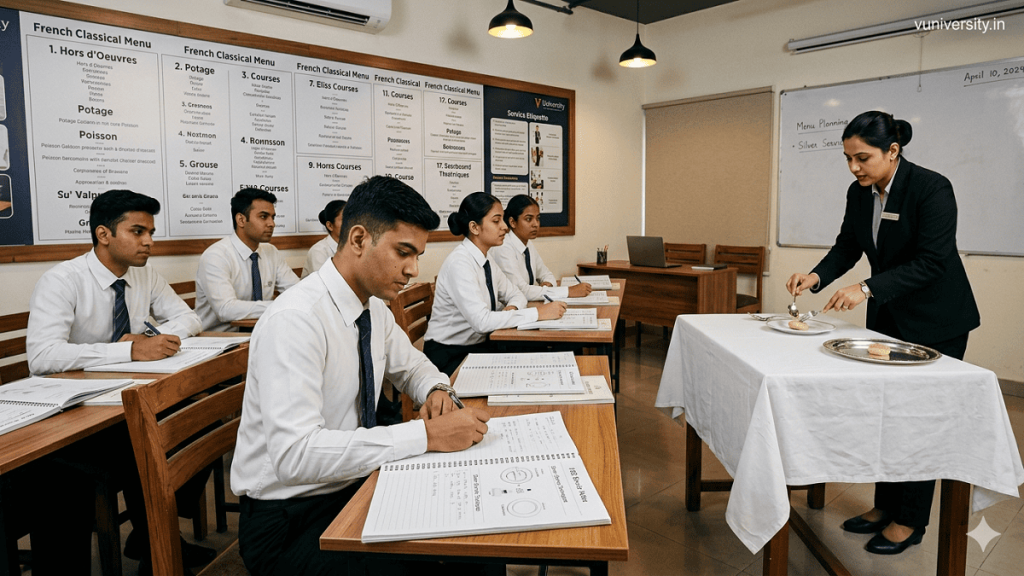
White Paper on 404 Food and Beverage Service
Executive Summary
The 404 Food and Beverage Service course is a foundational program in hospitality education, designed to equip students with both theoretical knowledge and practical skills essential for professional service roles. This white paper examines the course’s key modules, industry applications, and its role in preparing learners for careers in hotels, restaurants, catering, and institutional food service.
Course Framework
1. Menu Knowledge
- Covers types of menus: à la carte, table d’hôte, cyclic, and institutional.
- Emphasizes the French Classical Menu, a cornerstone of hospitality training.
- Focuses on menu engineering and customer-centric design.
2. Service Styles and Techniques
- Includes silver service, plate service, buffet service, and room service.
- Practical training in table setting, mise-en-place, and tray handling.
- Reinforces etiquette and guest interaction standards.
3. Beverage Service
- Wine service procedures: classification, pairing, and serving temperatures.
- Knowledge of spirits, beers, and non-alcoholic beverages.
- Correct use of service tools such as the waiter’s friend.
4. Departmental Coordination
- Interaction between food and beverage service, kitchen, housekeeping, and front office.
- Organizational structures and staff responsibilities.
- Emphasis on teamwork and communication.
5. Hygiene and Safety Standards
- Food safety regulations and sanitation practices.
- Grooming and professional etiquette.
- Emergency handling and compliance with health laws.
Industry Application
Graduates of the course are prepared for diverse roles across hospitality sectors:
- Hotels and Resorts: Fine dining, banquets, and room service.
- Restaurants and Cafés: Casual dining, quick service, and specialty outlets.
- Institutional Catering: Hospitals, schools, and corporate facilities.
- Event Management: Large-scale banquets and catering services.
The course bridges academic learning with industry expectations, ensuring students are job-ready.
Strategic Importance
- Skill Development: Builds technical service skills and soft skills like communication.
- Professional Standards: Aligns with global hospitality benchmarks.
- Career Readiness: Provides practical exposure through on-the-job training.
References
For structured curriculum and industry standards, consult:
- National Council for Hotel Management and Catering Technology (NCHMCT)
- Tourism & Hospitality Skill Council
- SetupMyHotel
Conclusion
The 404 Food and Beverage Service course is more than an academic requirement; it is a strategic pathway to professional excellence in hospitality. By mastering menu knowledge, service techniques, beverage handling, and hygiene standards, students gain the competence and confidence to thrive in dynamic food service environments.
#HospitalityTraining
Industry Application of 404 Food and Beverage Service
Introduction
The 404 Food and Beverage Service course is not limited to academic learning; it is designed to prepare students for direct application in the hospitality industry. By mastering service techniques, menu knowledge, beverage handling, and hygiene standards, graduates are equipped to meet the operational demands of hotels, restaurants, catering services, and institutional food outlets.
Key Industry Applications
1. Hotels and Resorts
- Application of menu knowledge in fine dining and banquets.
- Execution of service styles such as silver service and room service.
- Coordination with housekeeping and front office for seamless guest experiences.
2. Restaurants and Cafés
- Use of beverage service skills for wine, coffee, and specialty drinks.
- Menu engineering to balance profitability and customer satisfaction.
- Guest interaction techniques for upselling and complaint handling.
3. Institutional Catering
- Application of cyclic menus in hospitals, schools, and corporate cafeterias.
- Emphasis on hygiene standards and food safety compliance.
- Efficient service delivery for large-scale operations.
4. Event Management and Banquets
- Large-scale buffet setups and banquet service coordination.
- Handling diverse guest requirements with professionalism.
- Integration of service notes into real-time event execution.
5. Cruise Lines and Airlines
- Specialized training in compact service environments.
- Adherence to international hospitality standards.
- Focus on guest privacy and confidentiality during service.
Strategic Benefits for Industry
- Operational Efficiency: Standardized service techniques reduce errors and improve speed.
- Customer Satisfaction: Professional etiquette and guest handling enhance experiences.
- Compliance: Knowledge of hygiene and safety ensures adherence to regulations.
- Career Readiness: Students transition smoothly into industry roles with practical exposure.
References
For structured industry standards and training outcomes:
- National Council for Hotel Management and Catering Technology (NCHMCT)
- Tourism & Hospitality Skill Council
- SetupMyHotel
Conclusion
The 404 Food and Beverage Service course is a bridge between classroom learning and industry practice. Its modules directly align with operational needs across hospitality sectors, ensuring that graduates are not only exam-ready but also industry-ready.
#FoodAndBeverageService
Ask FAQs
What is the objective of the 404 Food and Beverage Service course?
The course aims to provide students with both theoretical knowledge and practical skills in food and beverage operations, preparing them for careers in hotels, restaurants, catering, and institutional food service.
Which topics are most important for exam preparation?
Key topics include menu knowledge (especially French Classical Menu), service styles (silver, plate, buffet, room service), beverage service procedures, departmental coordination, and hygiene standards.
What practical skills are emphasized in the course?
Students practice table setting, tray handling, wine service, upselling techniques, and guest interaction, ensuring they are job-ready for hospitality roles.
How can students use course notes effectively for exam success?
Notes should be organized by modules, converted into flashcards or mock questions, and reinforced through practical drills. Cross-referencing with external resources like NCHMCT and SetupMyHotel enhances preparation.
What are the industry applications of this course?
Graduates apply their skills in hotels, restaurants, cafés, catering services, event management, cruise lines, and airlines, aligning academic learning with real-world hospitality operations.
Source: ITM HM Tutorials
Table of Contents
Disclaimer: The information provided on the 404 Food and Beverage Service course, including study notes, exam preparation tips, and industry applications, is intended solely for educational purposes. While every effort has been made to ensure accuracy and relevance, learners are advised to consult official curriculum documents, institutional guidelines, and qualified hospitality educators before making academic or professional decisions. External references such as NCHMCT, Tourism & Hospitality Skill Council, and SetupMyHotel should be used to validate and supplement learning.