

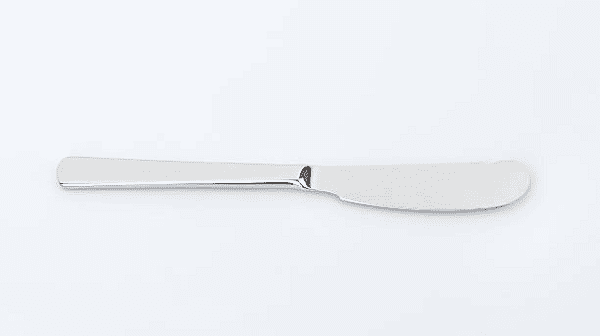
Butter knife- A butter knife is a type of knife designed specifically for spreading butter or other spreads onto bread, toast, or other food items. It typically has a flat, dull blade with a rounded or slightly pointed tip. This design makes it safe and easy to use for spreading butter without tearing or damaging the bread.
Butter knives can come in various materials, including stainless steel, plastic, or even wooden handles. They are a common utensil in most kitchens and are often part of a standard cutlery set. In addition to spreading butter, they can also be used for spreading other condiments like jam, peanut butter, or cream cheese.
🎓 Syllabus Context: Diploma in Hotel Management and Catering Technology
The Butter Knife is covered as part of the Food and Beverage Service and Food Production modules within the DHMCT curriculum.
It is not a full topic on its own, but it appears under sections such as “Types of Cutlery”, “Table Setup and Layout”, and “Service Equipment.”
🏨 Subject Area: Food & Beverage Service (F&B Service)
Module: Food & Beverage Service – I (Foundation Level)
Unit: Introduction to Food and Beverage Service
Topics:
- Types of Service (Silver, American, Buffet, etc.)
- F&B Outlets in Hotels
- Hierarchy of F&B Department
- Restaurant Layout and Equipment
Subtopic: Tableware, Glassware, and Cutlery
Content Includes:
- Classification of Cutlery:
- Flatware: Spoons, Forks, Knives
- Hollowware: Teapots, Coffee pots, etc.
- Miscellaneous Items: Butter dish, toast rack, cruet set, etc.
→ Under “Cutlery”:
- Dinner Knife
- Fish Knife
- Steak Knife
- Dessert Knife
- Butter Knife
🔹 Detailed Learning: Butter Knife
| Aspect | Details |
|---|---|
| Name of Equipment | Butter Knife |
| Category | Cutlery / Flatware |
| Material | Stainless steel or silver-plated metal |
| Design Features | Rounded tip, blunt edge, short blade |
| Purpose | Used for spreading butter, jam, or soft spreads on bread or toast |
| Accompaniment | Usually placed with a side plate (bread plate) on the left-hand side of a formal table setup |
| Placement | On top of the side plate, blade facing downwards and towards the diner |
| Used in | Table d’hôte and à la carte service setups |
| Hygiene Practice | Each guest should have an individual butter knife to avoid cross-contamination |
🔹 Module: Food & Beverage Service – II (Advanced Level)
Topics where Butter Knife appears indirectly:
- Restaurant Mise-en-Place and Mise-en-Scene
- Types of Meal and Course Sequences
- Table Setting for Breakfast, Lunch, and Dinner
- Specialized Service (Silver service, English service, etc.)
Learning Activities:
- Identifying and handling cutlery, crockery, and glassware.
- Setting up formal dining tables.
- Practicing the use of service tools and cutlery during practical sessions.
🔹 Module: Food Production (Kitchen Operations)
Although not a direct kitchen tool, the Butter Knife may be used in basic food preparation or presentation during:
- Sandwich making
- Pastry and bakery labs (spreading butter, icing, or fillings)
- Garnishing and plating exercises
📘 Typical Practical Session Involving Butter Knife
| Practical Activity | Learning Objective |
|---|---|
| Table laying for continental breakfast | Identify correct butter knife placement and pairing with side plate |
| Service of bread and butter | Learn correct use of butter dish and individual butter knife |
| Buffet setup practice | Understand placement and handling in self-service arrangements |
| Cutlery identification test | Recognize and describe use of all standard cutlery items including butter knife |
🎯 Learning Outcomes
After completing the related modules, students will be able to:
- Identify and correctly place different types of knives including the butter knife.
- Demonstrate proper table setting for formal and informal meals.
- Explain the function and hygienic handling of each cutlery item.
- Apply F&B service standards in practical dining scenarios.
📚 Recommended Books (as per DHMCT Curriculum)
- “Food & Beverage Service” by Dennis Lillicrap and John Cousins
- “Modern Restaurant Service” by John Fuller
- “Theory of Cookery” by Krishna Arora
- “Food & Beverage Service Training Manual” by Sudhir Andrews
- “The Art and Science of Culinary Preparation” by Jerald W. Chesser
What is Butter knife
Courtesy: Live Free
A butter knife is a type of table knife designed for spreading butter and other spreads onto bread, crackers, or other food items. It typically has a flat, relatively dull blade that is not sharp like a traditional kitchen knife. The purpose of the butter knife is to make it easy to spread butter without tearing or damaging the bread or other items you are spreading it on.
Butter knives are commonly made from stainless steel, and they can vary in size and design. Some butter knives have a serrated edge on one side, which can be useful for cutting through softer spreads or for slicing bread. Others have a more rounded tip for spreading. They are often part of a standard cutlery set in many households and are used for not only spreading butter but also other condiments like jam, peanut butter, cream cheese, or even mayonnaise.
Who is Required Butter knife
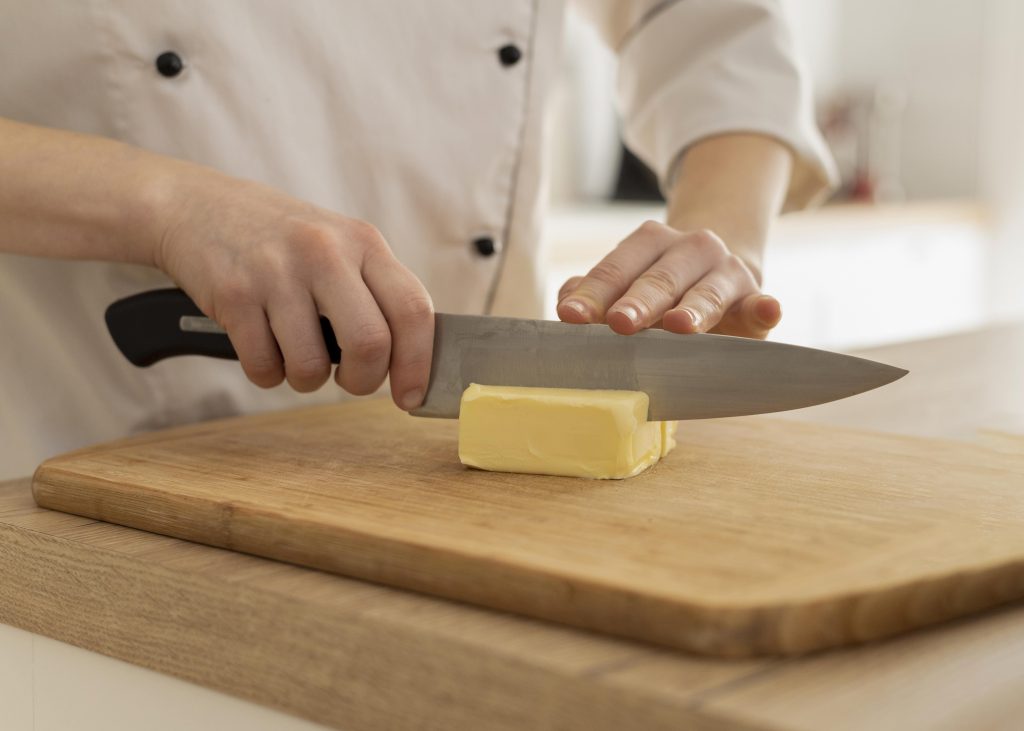
There is no widely recognized individual or entity referred to as “Butter knife.” The term “butter knife” typically refers to a type of knife used for spreading butter or other spreads on food items, as described in the previous responses. If you are asking about a specific person or entity named “Butter knife,” it is likely a unique or obscure reference that doesn’t have broad public recognition. Please provide more context or details if you have a specific inquiry about someone or something named “Butter knife.”
When is Required Butter knife
A butter knife is not associated with a specific time or date. It is a kitchen utensil used for spreading butter and other spreads on food items. It can be used at any time when you are preparing or serving food that requires the spreading of butter or other similar substances. There is no specific time or occasion associated with the use of a butter knife; it is a common tool found in most kitchens and can be used as needed.
Where is Required Butter knife
A butter knife is typically found in the kitchen, specifically in a cutlery drawer or set. It is a common kitchen utensil used for spreading butter and other spreads on various food items like bread, toast, or crackers. Most households and kitchens have a butter knife as part of their standard set of kitchen utensils. If you are looking for a butter knife, you can check your kitchen utensil drawer or set. They are often stored with other types of knives, forks, and spoons.
How is Required Butter knife
A butter knife is typically a simple kitchen utensil used for spreading butter and other spreads onto food items such as bread, toast, or crackers. It is designed for this specific purpose and is not meant for cutting or chopping like regular kitchen knives. Here’s how a butter knife is typically characterized:
- Blade: The blade of a butter knife is usually flat and dull, with a rounded or slightly pointed tip. It is not sharp and is designed to avoid damaging the bread or other items you are spreading.
- Handle: The handle of a butter knife can be made from various materials, including plastic, wood, or stainless steel. It provides a comfortable grip for spreading butter evenly.
- Size: Butter knives come in various sizes, but they are generally smaller and narrower than standard dinner knives.
- Function: The primary function of a butter knife is to spread butter and other spreads, such as jam, peanut butter, or cream cheese, onto bread or similar food items.
To use a butter knife, you simply scoop up the desired amount of butter or spread and then use the flat blade to spread it onto the food. It is a handy tool in the kitchen for ensuring an even and smooth application of spreads.
Case Study on Butter knife
The Versatile Butter Knife
Background:
Company XYZ is a manufacturer of kitchen utensils, including cutlery and serving tools. They produce a popular line of butter knives known for their quality and versatility. This case study explores how a butter knife can be a key component in the kitchen and how it contributed to the success of Company XYZ.
Challenge:
Company XYZ faced the challenge of establishing itself in a highly competitive kitchen utensil market. They needed to differentiate their products and demonstrate the value of seemingly ordinary tools like butter knives.
Solution:
Company XYZ recognized that even simple utensils could play a pivotal role in the kitchen. They decided to promote their butter knife not just as a butter spreader but as a versatile kitchen tool with multiple applications. To do this, they employed several strategies:
1. Multi-Purpose Design: Company XYZ redesigned their butter knife to include features that made it suitable for more than just spreading butter. They created a serrated edge for cutting soft foods, a flat edge for spreading, and a pointed tip for piercing or serving.
2. Marketing Campaign: They launched a marketing campaign that highlighted the various uses of their versatile butter knife. They demonstrated its ability to spread butter, cut soft fruits, and even use the pointed tip for picking up delicate appetizers. They promoted the idea of having a single tool for multiple kitchen tasks.
3. Customer Education: The company offered online cooking tutorials and guides showcasing the butter knife’s multiple functions. They engaged with food influencers and chefs who demonstrated creative uses for the knife.
Results:
Company XYZ’s innovative approach to marketing the versatile butter knife led to several positive outcomes:
1. Increased Sales: The demand for their butter knife surged, and they saw a significant increase in sales.
2. Market Differentiation: They successfully distinguished themselves from competitors by promoting the knife as a multi-purpose tool.
3. Positive Reviews: Customers praised the versatility and quality of the butter knife in online reviews and on social media.
4. Brand Loyalty: Customers who enjoyed the butter knife’s versatility were more likely to explore other products in Company XYZ’s kitchen utensil line, leading to increased brand loyalty.
Conclusion:
The case of Company XYZ’s butter knife demonstrates the importance of innovation and marketing even for seemingly ordinary kitchen tools. By repositioning the butter knife as a versatile utensil, they not only solved their initial challenge of market entry but also cultivated a loyal customer base. This case study highlights how creative thinking and customer education can turn a seemingly simple product into a kitchen essential.
White paper on Butter knife
Abstract:
- A brief summary of what the white paper covers, its purpose, and why butter knives are worth exploring in more detail.
Table of Contents:
- Introduction
- Overview of the importance of utensils in the kitchen
- Purpose and scope of the white paper
- Historical Perspective
- A brief history of the butter knife
- Evolution of butter knives from ancient to modern times
- Types and Designs
- Description of various types of butter knives
- Focus on design features, materials, and ergonomics
- The Versatility of a Butter Knife
- Beyond butter: other spreads and applications
- Practical uses in the kitchen
- Choosing the Right Butter Knife
- Factors to consider when selecting a butter knife
- How to maintain and care for your butter knife
- Cultural Significance
- The butter knife’s role in culinary traditions around the world
- Iconic butter knife moments in literature, film, and art
- The Future of Butter Knives
- Innovation and trends in butter knife design
- The sustainability of materials and manufacturing
- Conclusion
- Recap of the butter knife’s significance
- The enduring relevance of a simple kitchen tool
References:
- Cite sources and references used throughout the white paper.
Appendix:
- Additional resources, such as images of different types of butter knives, maintenance tips, or recipes that utilize butter knives.
In each section, you can provide detailed information, historical anecdotes, and practical tips related to butter knives. While it may not be a typical subject for a white paper, such a document can serve as a comprehensive guide for those interested in understanding the nuances and significance of a seemingly simple kitchen tool.
Industrial Application of Butter knife
Courtesy: WREG News Channel 3
Although the butter knife is primarily known as a domestic cutlery item, its industrial applications extend into several fields — particularly in manufacturing, hospitality, packaging, material testing, and prototyping. Below is a detailed explanation of its uses across industries:
🔹 1. Food Processing and Hospitality Industry
Primary Industrial Domain: Food Service, Catering, and Manufacturing
Applications:
- Used in butter and margarine packaging lines to test product consistency and spreadability.
- In food quality control laboratories, butter knives are used for sampling semi-solid food materials (like spreads, pastes, or cheese).
- Hotels, airlines, and restaurants use butter knives as part of standardized cutlery in large-scale catering operations.
- In culinary training institutes, butter knives are used to demonstrate safe spreading techniques and knife handling for workers and chefs.
🔹 2. Packaging and Quality Control Industry
Primary Industrial Domain: Packaging & Material Testing
Applications:
- Used as a non-sharp instrument for consistency testing of viscous or spreadable products (e.g., ointments, creams, adhesives).
- In cosmetic and pharmaceutical industries, it’s used to test texture and uniformity of creams, gels, and emulsions before packaging.
- Acts as a standardized tool in spreadability tests for lubricants, adhesives, and pastes.
🔹 3. Manufacturing and Prototyping
Primary Industrial Domain: Metalworking, Cutlery Manufacturing, and Product Design
Applications:
- Serves as a template or model for designing ergonomic handles and blade profiles.
- Used in quality testing labs for edge finishing, surface polish, and stainless steel coating performance.
- In 3D printing and prototyping, butter knives are used as reference models for tool shape and weight balance studies.
🔹 4. Laboratory and Research Applications
Primary Industrial Domain: Chemical and Material Laboratories
Applications:
- Used as a spatula substitute for handling non-reactive or low-hazard materials.
- Common in food technology or material science labs for sample preparation or surface application of semi-solid compounds.
- Serves as a control tool for spreadability coefficient tests in rheological studies.
🔹 5. Artisanal and Craft Industries
Primary Industrial Domain: Handicrafts, Resin Art, Pottery
Applications:
- Used to smooth, spread, or sculpt materials such as clay, resin, wax, or plaster.
- In painting and restoration workshops, a butter knife may be repurposed as a palette knife for mixing paints and varnishes.
🔹 6. Medical and Pharmaceutical Industry
Primary Industrial Domain: Laboratory Testing & Preparation
Applications:
- Used for manual sample spreading during ointment formulation.
- In pharmaceutical research labs, employed for semi-solid drug sample transfer or texture testing.
⚙️ Industrial Material and Design Considerations
- Material: Stainless steel or food-grade plastic (for corrosion resistance and hygiene)
- Finish: Mirror-polished or matte (depending on industrial use)
- Ergonomic Design: Ensures uniform pressure during spreading or testing
- Durability: Resistant to chemical corrosion and temperature variations
🧠 Conclusion
The butter knife, though simple, has broad industrial utility beyond household use. It serves as:
- A testing tool in food, cosmetic, and pharmaceutical industries
- A design model in manufacturing
- A safe, multipurpose instrument in laboratories and training environments
Its non-sharp nature and precision spreading ability make it a versatile industrial accessory in multiple sectors.