


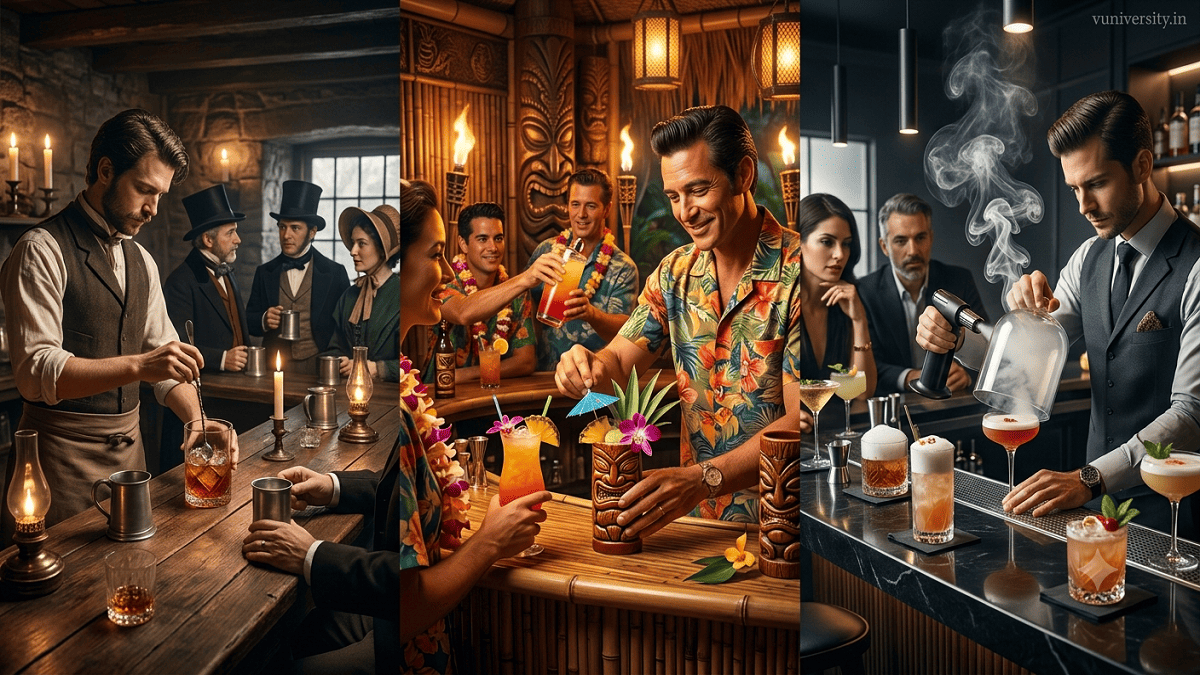
Cocktails: History, Origin, and Evolution
Cocktails originated in the early 19th century, with the first printed definition appearing in 1806 in New York. Since then, they have evolved from simple spirit‑based mixtures into a global cultural phenomenon, shaped by social trends, technological advances, and creative bartending.
Origins of Cocktails
The word cocktail first appeared in print in 1806, defined as “a stimulating liquor composed of spirits of any kind, sugar, water, and bitters.” This formula laid the foundation for classics like the Old Fashioned, which remains popular today. Before this era, spirits were typically consumed neat or with minimal mixers. The idea of combining multiple ingredients to create a balanced drink was revolutionary, marking the birth of modern mixology.
The Golden Age of Cocktails (1800s–1920s)
By the mid‑19th century, bartending had become a recognized profession. Jerry Thomas’s 1862 book, The Bartender’s Guide, was the first comprehensive cocktail manual, featuring recipes like the Martinez (precursor to the Martini) and the Tom Collins. This period saw the rise of iconic such as the Manhattan, Martini, and Sazerac, alongside the introduction of specialized glassware and refined mixing techniques.
Prohibition and Global Spread (1920–1933)
The U.S. Prohibition era forced bartenders to innovate in secrecy, often masking poor‑quality alcohol with mixers. Ironically, Prohibition helped spread cocktail culture worldwide, as American bartenders emigrated to Europe, Cuba, and Asia. This period also gave rise to speakeasies and creative adaptations that influenced global drinking traditions.
Post‑Prohibition and Mid‑20th Century Trends
After Prohibition ended in 1933, cocktail guides flourished, and new styles emerged. The tiki movement, popularized by Trader Vic in the 1940s, introduced tropical like the Mai Tai. However, the 1960s–70s marked a decline in quality, with premixed ingredients and shortcuts dominating bars.
The Craft Cocktail Renaissance (1980s–Present)
The late 20th century saw a revival of classic techniques and fresh ingredients. Bartenders returned to historical recipes, emphasizing authenticity and craftsmanship. Today, are influenced by molecular mixology, farm‑to‑glass movements, and artisanal spirits. Modern mixologists experiment with textures, foams, and infusions, while sustainability and local sourcing shape contemporary practices.
Cultural Significance
Cocktails have always reflected broader social changes:
- Class distinction: Certain drinks were associated with elite society, while others were tied to working‑class traditions.
- Gender roles: Attitudes toward women drinking shifted over time, especially during the 20th century.
- Urban development: Cocktail bars became cultural hubs in cities worldwide.
Further Reading
For deeper insights into cocktail history and modern mixology, explore:
#MolecularMixology
What is the history and origin of cocktails?
The history and origin of is a fascinating journey that reflects cultural shifts, technological innovations, and social traditions across centuries.
Early Origins
The first printed definition of a cocktail appeared in 1806 in The Balance and Columbian Repository, a New York publication. It described a cocktail as “a stimulating liquor composed of spirits of any kind, sugar, water, and bitters.” This formula laid the foundation for classics like the Old Fashioned, which remains a staple today. Before this period, spirits were typically consumed neat or with minimal mixers, making the idea of blending ingredients revolutionary.
The Golden Age of Cocktails (19th Century)
By the mid‑1800s, bartending had become a recognized profession. Jerry Thomas, often called the “father of American mixology,” published The Bartender’s Guide in 1862, the first comprehensive cocktail manual. This era saw the creation of enduring drinks such as the Martini, Manhattan, and Sazerac, alongside the introduction of specialized glassware and refined mixing techniques.
Prohibition and Global Spread (1920–1933)
The U.S. Prohibition era forced bartenders to innovate in secrecy, often masking poor‑quality alcohol with mixers. Ironically, Prohibition helped spread cocktail culture worldwide, as American bartenders emigrated to Europe, Cuba, and Asia. Speakeasies became cultural icons, and like the Sidecar and Daiquiri gained popularity.
Mid‑20th Century Trends
After Prohibition ended, flourished again. The tiki movement, pioneered by Trader Vic and Don the Beachcomber in the 1940s, introduced tropical drinks such as the Mai Tai. However, the 1960s–70s saw a decline in quality, with premixed ingredients and shortcuts dominating bars.
The Craft Cocktail Renaissance (1980s–Present)
The late 20th century marked a revival of cocktail craftsmanship. Bartenders rediscovered historical recipes, emphasized fresh ingredients, and embraced artisanal spirits. Today, are influenced by molecular mixology, farm‑to‑glass movements, and sustainability practices. Modern mixologists experiment with foams, infusions, and local sourcing, elevating into an art form.
Cultural Significance
Cocktails have always mirrored broader social changes:
- Class distinction: Certain drinks were linked to elite society, while others reflected working‑class traditions.
- Gender roles: Attitudes toward women drinking shifted significantly during the 20th century.
- Urban culture: Cocktail bars became hubs of social life and creativity in cities worldwide.
Further Reading
For deeper insights into cocktail history and evolution, explore:
#LowABVCocktails
How have cocktails evolved over time across different cultures?
Cocktails have evolved from simple spirit‑based mixtures in 19th‑century America into a global cultural phenomenon, with each region shaping its own traditions — from Caribbean rum punches to Japanese precision mixology. Their journey reflects social change, colonial trade, and modern craft revival.
Early American Foundations
- First Definition (1806, New York): A cocktail was described as spirits, sugar, water, and bitters — the formula behind the Old Fashioned.
- Golden Age (mid‑1800s): Bartenders like Jerry Thomas elevated mixology, publishing The Bartender’s Guide (1862) and creating classics such as the Martini and Manhattan.
European Influence
- British Punches: Large communal bowls of spirits, citrus, and spices influenced early cocktail culture.
- French Aperitifs: Vermouth and absinthe shaped like the Negroni and Sazerac, emphasizing balance and ritual.
- Italian Innovation: Bitter liqueurs such as Campari became central to aperitivo culture, blending social tradition with flavor complexity.
Caribbean & Latin America
- Rum Punches: Rooted in colonial sugarcane economies, rum became staples of island culture.
- Cuba: The Daiquiri and Mojito emerged, blending rum with citrus and mint, symbolizing tropical freshness.
- Mexico: The Margarita highlighted tequila and lime, later becoming a global icon.
Asia’s Precision & Innovation
- Japan: Cocktail culture emphasizes meticulous technique, glassware, and hospitality. Drinks like the Japanese Highball showcase simplicity and refinement.
- India: Rum‑based such as Old Monk mixes reflect local preferences, often adapted with spices and tropical fruits.
Prohibition & Global Spread
- 1920–1933 (USA): Bartenders fled abroad, spreading cocktail traditions to Europe, Cuba, and Asia. Speakeasies popularized creative adaptations, masking poor‑quality spirits with mixers.
Mid‑20th Century Trends
- Tiki Movement (1940s): Trader Vic and Don the Beachcomber introduced tropical like the Mai Tai, blending rum with exotic flavors.
- Decline (1960s–70s): Premixed ingredients reduced quality, leading to what historians call the “dark ages”.
Craft Cocktail Renaissance (1980s–Present)
- Revival of Classics: Bartenders rediscovered historical recipes, emphasizing authenticity.
- Global Fusion: Mixologists now incorporate local ingredients — from Asian teas to Latin spices.
- Modern Innovations: Molecular mixology, sustainability, and farm‑to‑glass movements define today’s cocktail culture.
Cultural Significance
- Social Identity: often symbolize class, gender roles, and urban sophistication.
- Global Diversity: Each culture adapts to local tastes — from Caribbean rum traditions to Japanese artistry.
- Modern Expression: Today, are both a culinary art and a cultural statement.
Further Reading
For deeper insights into cocktail evolution across cultures:
- Luxury Columnist: Epic History of Cocktails
- The Tasting Alliance: Cocktail Culture Evolution
- Elixiary Education: Cocktail History
#SustainableMixology
What are the key milestones in the development of modern cocktails?
The development of modern is marked by several key milestones that shaped mixology into both a craft and a cultural movement. Here’s a structured overview of the most important turning points:
1806 – First Printed Definition
The earliest known definition of a cocktail appeared in The Balance and Columbian Repository (Hudson, New York). It described a cocktail as “a stimulating liquor composed of spirits of any kind, sugar, water, and bitters.” This formula gave rise to classics like the Old Fashioned.
1862 – Jerry Thomas Publishes The Bartender’s Guide
Often called the “father of American mixology,” Jerry Thomas compiled the first cocktail manual, standardizing recipes and techniques. His book introduced drinks such as the Martinez (precursor to the Martini) and established bartending as a profession.
Late 19th Century – Golden Age of Cocktails
This period saw the creation of enduring classics like the Martini, Manhattan, and Sazerac. Innovations included specialized glassware, refined mixing methods, and the rise of hotel bars as cultural hubs.
1920–1933 – Prohibition Era
In the United States, Prohibition forced bartenders underground. Speakeasies flourished, and were often used to mask poor‑quality spirits. Many American bartenders emigrated abroad, spreading cocktail culture to Europe, Cuba, and Asia.
1940s – Tiki Movement
Trader Vic and Don the Beachcomber popularized tropical such as the Mai Tai and Zombie, blending rum with exotic fruits and spices. Tiki bars became cultural icons, influencing mid‑century cocktail trends.
1960s–1970s – Decline in Quality
Premixed ingredients and shortcuts dominated bars, leading to what historians call the “dark ages”. Authentic recipes and craftsmanship were largely forgotten during this period.
1980s–2000s – Craft Cocktail Renaissance
Bartenders rediscovered historical recipes, emphasized fresh ingredients, and embraced artisanal spirits. The revival of classics like the Negroni and Daiquiri marked a return to authenticity. Molecular mixology and farm‑to‑glass movements emerged, elevating into culinary art.
Present Day – Global Innovation
Modern reflect cultural fusion, sustainability, and creativity. Mixologists experiment with foams, infusions, and local sourcing, while cocktail bars serve as cultural hubs worldwide. Today, are both a culinary craft and a cultural statement.
Further Reading
For deeper insights into cocktail milestones:
#TikiTradition
How have bartending techniques influenced the evolution of cocktails?
Bartending techniques have been central to the evolution of, transforming them from simple spirit‑based mixtures into complex cultural expressions. Innovations in mixing, presentation, and precision have elevated into an art form, shaping their history from the 19th century to today.
Early Foundations (1800s)
- Basic Mixing: Early bartenders combined spirits, sugar, water, and bitters — the formula behind the Old Fashioned.
- Jerry Thomas’s Influence: In 1862, Thomas published How to Mix Drinks, the first cocktail manual, introducing techniques like shaking and stirring, which standardized preparation and elevated bartending into a profession.
Golden Age of Cocktails (Late 19th – Early 20th Century)
- Precision & Balance: Bartenders emphasized exact measurements and flavor harmony, creating enduring classics like the Martini and Manhattan.
- Glassware & Presentation: Specialized glasses and garnishes became integral, enhancing both aesthetics and experience.
- Ice Innovation: The widespread use of clear ice cubes improved texture and consistency, revolutionizing cocktail service.
Prohibition Era (1920–1933)
- Adaptation: Bartenders masked poor‑quality spirits with mixers, leading to creative recipes.
- Global Spread: Many American bartenders emigrated, introducing cocktail techniques to Europe, Cuba, and Asia. Speakeasies also popularized shaken and clandestine innovation.
Mid‑20th Century Trends
- Tiki Techniques: Trader Vic and Don the Beachcomber pioneered tropical, using layered flavors, elaborate garnishes, and theatrical presentation.
- Decline in Craft: The 1960s–70s saw reliance on premixed ingredients, reducing emphasis on technique and authenticity.
Craft Cocktail Renaissance (1980s–Present)
- Return to Classics: Bartenders revived historical recipes, focusing on authenticity and craftsmanship.
- Molecular Mixology: Techniques such as foams, infusions, and spherification introduced scientific precision.
- Global Fusion: Mixologists integrated local ingredients and cultural traditions, expanding the repertoire worldwide.
- Sustainability: Modern bartending emphasizes eco‑friendly practices, seasonal sourcing, and waste reduction.
Cultural Impact of Techniques
- Elevating Bartenders: Once seen as mere servers, bartenders are now regarded as artisans and innovators.
- Social Identity: Techniques reflect cultural values — Japanese bartending emphasizes precision and ritual, while Caribbean traditions highlight communal enjoyment.
- Consumer Experience: Techniques shape not only flavor but also storytelling, turning into cultural symbols.
Further Reading
For deeper insights into bartending’s role in cocktail evolution:
- ET Hospitality: Bartending Through the Ages (hospitality.economictimes.indiatimes.com in Bing)
- The Tasting Alliance: Cocktail Culture Evolution
- Smithsonian Magazine: History of Cocktails
#CraftCocktailRenaissance
What are the current trends shaping the future of cocktails?
The future of is being shaped by dynamic trends that blend tradition with innovation, reflecting broader cultural, technological, and sustainability movements. Here are the most significant developments influencing modern mixology:
Sustainability and Eco‑Friendly Practices
Bartenders are increasingly adopting zero‑waste techniques, using citrus peels, herb stems, and leftover ingredients to minimize waste. Locally sourced and seasonal produce is prioritized, aligning with farm‑to‑glass movements. This trend reflects a growing consumer demand for environmentally responsible drinking experiences.
Low‑ABV and Non‑Alcoholic Options
The rise of low‑alcohol cocktails and non‑alcoholic spirits caters to health‑conscious consumers. Drinks like spritzes, kombucha‑based mixes, and botanical infusions offer complexity without high alcohol content. Brands such as Seedlip have popularized alcohol‑free spirits, making mindful drinking a mainstream choice.
Technology and Molecular Mixology
Advances in molecular gastronomy have entered cocktail culture, with techniques like foams, spherification, and smoke infusions creating multisensory experiences. Digital tools, including AI‑driven flavor pairing and automated cocktail machines, are redefining precision and creativity behind the bar.
Global Fusion and Cultural Influence
Cocktails increasingly incorporate regional ingredients and traditions. Japanese bartending emphasizes precision and ritual, Latin American mixology highlights tequila and mezcal, while Caribbean rum traditions continue to inspire tropical blends. This global exchange enriches cocktail diversity and authenticity.
Wellness and Functional Ingredients
Modern often feature adaptogens, superfoods, and herbal infusions. Ingredients like turmeric, matcha, and CBD are being integrated to align with wellness trends, offering drinks that claim both flavor and functional benefits.
Elevated Presentation and Experience
Cocktails are no longer just beverages but experiential art forms. Bars focus on storytelling, theatrical presentation, and immersive environments. Glassware, garnishes, and even aroma play a role in creating memorable drinking experiences.
Key Takeaway
The cocktail industry is evolving toward sustainability, inclusivity, and innovation. From eco‑friendly practices to global cultural fusion, bartending is redefining itself as both a craft and a lifestyle movement. The future of lies in balancing tradition with experimentation, ensuring relevance across diverse audiences.
Further Reading
For deeper insights into cocktail trends:
#ClassicCocktails
Case Study of Cocktails
Background
Cocktails, defined in 1806 as a mix of spirits, sugar, water, and bitters, began as simple blends in early 19th‑century America. Over time, they transformed into a global cultural phenomenon, reflecting shifts in society, technology, and taste.
Problem Context
Initially, were created to make spirits more palatable and socially acceptable. Bartenders faced the challenge of balancing flavors, improving presentation, and elevating drinking from necessity to experience. The evolution of techniques, ingredients, and cultural influences shaped into a sophisticated art form.
Key Milestones
- 1806 – First Definition: formally recognized in New York print media.
- 1862 – Jerry Thomas’s Guide: Standardized recipes and techniques, establishing bartending as a profession.
- Prohibition Era (1920–1933): Speakeasies popularized creative adaptations; American bartenders spread cocktail culture globally.
- 1940s – Tiki Movement: Tropical like the Mai Tai introduced theatrical presentation and layered flavors.
- 1980s–2000s – Craft Renaissance: Revival of classics, focus on fresh ingredients, and rise of molecular mixology.
- Present Day: Sustainability, low‑ABV options, and global fusion define modern cocktail culture.
Impact
Cocktails influenced:
- Economics: Growth of hospitality and bar industries worldwide.
- Culture: Symbol of sophistication, leisure, and social identity.
- Innovation: Techniques like shaking, stirring, layering, and molecular mixology expanded creative possibilities.
- Globalization: Regional traditions (Japanese precision, Caribbean rum, Latin American tequila) enriched cocktail diversity.
Conclusion
Cocktails illustrate how a simple formula evolved into a global cultural and culinary art. Their history reflects broader social changes — from Prohibition’s underground creativity to today’s sustainability and wellness trends. The case of demonstrates the interplay of tradition, innovation, and cultural identity in shaping modern lifestyles.
Further Reading
- Difford’s Guide – Comprehensive cocktail recipes and history.
- Liquor.com – Trends and techniques in modern mixology.
- Smithsonian Magazine – Historical perspectives on cocktail culture.
#GlobalCocktailCulture
Source: The History Guy: History Deserves to Be Remembered
White Paper on Cocktails
Executive Summary
Cocktails have evolved from simple spirit‑based mixtures in the early 19th century into a global cultural and culinary phenomenon. This white paper explores their origins, historical milestones, cultural significance, and modern innovations, while highlighting current trends shaping the future of mixology.
Introduction
The cocktail, first defined in 1806 in The Balance and Columbian Repository as “a stimulating liquor composed of spirits of any kind, sugar, water, and bitters,” has undergone significant transformation. From its humble beginnings, have mirrored social, economic, and cultural changes across centuries.
Historical Development
- Early Foundations (1806–1860s): emerged in the United States, with bartenders like Jerry Thomas codifying recipes in The Bartender’s Guide (1862).
- Golden Age (Late 19th Century): Classic such as the Martini, Manhattan, and Sazerac were created, emphasizing balance and precision.
- Prohibition Era (1920–1933): Speakeasies popularized creative adaptations, while American bartenders spread cocktail culture globally.
- Mid‑20th Century: The tiki movement introduced tropical, though the 1960s–70s saw a decline in quality due to premixed ingredients.
- Craft Renaissance (1980s–Present): Revival of classics, molecular mixology, and sustainability practices redefined as both art and science.
Cultural Significance
Cocktails reflect broader social dynamics:
- Class Identity: Certain drinks symbolized elite sophistication, while others were tied to working‑class traditions.
- Global Influence: Caribbean rum punches, Japanese precision mixology, and Latin American tequila traditions enriched cocktail diversity.
- Urban Culture: Cocktail bars became hubs of creativity, leisure, and cultural exchange.
Modern Innovations
- Molecular Mixology: Techniques such as foams, infusions, and spherification introduced scientific precision.
- Sustainability: Zero‑waste practices and farm‑to‑glass movements align with eco‑friendly values.
- Low‑ABV & Non‑Alcoholic Options: Health‑conscious consumers drive demand for mindful drinking experiences.
- Global Fusion: Regional ingredients and traditions are increasingly integrated into modern.
Future Outlook
The cocktail industry is poised to expand through:
- Technology Integration: AI‑driven flavor pairing and automated cocktail machines.
- Wellness Trends: Functional ingredients like adaptogens and superfoods.
- Experiential Drinking: Storytelling, immersive environments, and elevated presentation.
Conclusion
Cocktails exemplify the interplay of tradition, innovation, and cultural identity. Their evolution from a simple formula to a global art form underscores their enduring relevance in hospitality, lifestyle, and culinary innovation.
References
#MixologyEvolution
Inductory Application of Cocktails
Introduction
Cocktails are more than just mixed drinks; they represent the intersection of history, culture, and innovation. Originating in the early 19th century, cocktails have evolved into a global phenomenon, shaping hospitality practices and consumer experiences. Their inductory application lies in how they introduce individuals to the art of mixology, social rituals, and culinary creativity.
Historical Context
The first printed definition of a cocktail appeared in 1806 in New York, describing it as a blend of spirits, sugar, water, and bitters. This simple formula laid the foundation for classics such as the Old Fashioned. Over time, bartenders refined techniques, codified recipes, and elevated cocktails into a professional craft. Jerry Thomas’s Bartender’s Guide (1862) marked a turning point, standardizing preparation and inspiring generations of mixologists.
Applications in Hospitality
Cocktails serve as a gateway to hospitality innovation. Bars and restaurants use them to:
- Enhance Customer Experience: Signature cocktails create memorable brand identities.
- Promote Cultural Heritage: Regional drinks like the Mojito (Cuba) or Margarita (Mexico) showcase local traditions.
- Drive Revenue: Premium cocktails and seasonal menus increase profitability in the food and beverage industry.
Cocktails also play a role in tourism, with destinations such as Havana or New Orleans attracting visitors through their iconic cocktail culture.
Social and Cultural Applications
Cocktails embody social rituals and cultural identity. They are central to celebrations, networking events, and leisure activities. Their evolution reflects broader societal changes:
- Class Identity: Certain cocktails symbolize sophistication, while others are tied to working‑class traditions.
- Gender Roles: Drinks like the Cosmopolitan became cultural symbols of empowerment in the late 20th century.
- Urban Culture: Cocktail bars function as creative hubs, blending art, design, and gastronomy.
Modern Applications
Today, cocktails extend beyond traditional hospitality:
- Wellness Trends: Low‑ABV and non‑alcoholic cocktails cater to health‑conscious consumers.
- Sustainability: Zero‑waste bartending and farm‑to‑glass movements align with eco‑friendly practices.
- Innovation: Molecular mixology introduces scientific precision, while AI‑driven flavor pairing redefines creativity.
These applications highlight cocktails as both lifestyle products and cultural statements, bridging tradition with modernity.
Conclusion
The inductory application of cocktails lies in their ability to introduce individuals to a world of flavor, culture, and innovation. From historical roots to modern sustainability, cocktails remain a dynamic force in hospitality and social life. Their evolution demonstrates how a simple blend of ingredients can become a global cultural and economic driver.
References
- Difford’s Guide – Comprehensive cocktail recipes and history.
- Liquor.com – Trends and techniques in modern mixology.
- Smithsonian Magazine – Historical perspectives on cocktail culture.
#CocktailHistory
Ask FAQs
What is the origin of cocktails?
Cocktails originated in the early 19th century, with the first printed definition appearing in 1806 in New York. They were initially described as a mix of spirits, sugar, water, and bitters — a formula that gave rise to classics like the Old Fashioned.
How did Prohibition influence cocktail culture?
During U.S. Prohibition (1920–1933), bartenders masked poor‑quality alcohol with mixers, leading to creative recipes. Many American bartenders emigrated abroad, spreading cocktail traditions to Europe, Cuba, and Asia, which helped globalize cocktail culture.
What role do bartending techniques play in cocktail evolution?
Techniques such as shaking, stirring, layering, and molecular mixology have shaped cocktails over time. They influence flavor balance, texture, and presentation, elevating cocktails from simple drinks to culinary art forms.
What are the current trends shaping modern cocktails?
Modern cocktails emphasize sustainability, low‑ABV and non‑alcoholic options, global fusion of ingredients, and wellness‑focused infusions. Molecular mixology and AI‑driven flavor pairing are also redefining innovation in mixology.
Why are cocktails culturally significant?
Cocktails reflect social identity, class distinctions, and cultural traditions. They serve as symbols of sophistication, leisure, and creativity, while cocktail bars act as hubs of urban culture and social interaction.
Table of Contents
Disclaimer: This content is intended for informational and educational purposes only. It provides historical, cultural, and industry insights into cocktails and mixology. It does not promote excessive or irresponsible alcohol consumption. Readers are advised to enjoy cocktails responsibly and in accordance with local laws and regulations regarding alcohol. For health‑related concerns, consult a qualified professional.