

Nut cracker- A nutcracker is a tool designed to crack open the shells of nuts in order to access the edible nutmeat inside. It typically consists of two hinged levers with serrated jaws at the end, which are used to grip and exert pressure on the nutshell, causing it to crack and allow the nut to be removed. Nutcrackers come in various designs, from simple handheld models to more decorative and ornate versions often associated with holiday decorations.
There are also specialized nutcrackers for different types of nuts, such as those designed for walnuts, pecans, almonds, or even larger nuts like Brazil nuts. Some modern kitchen tools, like nutcracker pliers or devices with adjustable settings, make it easier to crack a variety of nuts. Nutcrackers are commonly used during the holiday season for cracking open walnuts and other nuts that are often found in traditional nut mixes and desserts.
🏨 Syllabus: Diploma in Hotel Management and Catering Technology
Topic: Nut Cracker
1. Subject Link
- Course / Subject: Food Production Equipment / Culinary Equipment
- Semester: Generally covered in Semester I or II
- Unit: Kitchen Tools and Equipment
- Topic: Small Tools and Equipment – Their Uses and Maintenance
2. Topic Title
Nut Cracker – Construction, Function, and Uses in Food Preparation
3. Learning Objectives
After studying this topic, the student will be able to:
- Identify and describe a nut cracker used in kitchens.
- Explain the principle and function of a nut cracker.
- Understand its applications in food preparation and catering operations.
- Demonstrate safe and hygienic handling of small kitchen tools.
4. Theory Content
(a) Introduction
- A nut cracker is a hand tool or mechanical device used to crack the hard shell of nuts such as walnuts, almonds, and pecans, enabling easy removal of the kernel.
- It may be a simple lever type or mechanical screw-type device used in both domestic and professional kitchens.
(b) Construction and Parts
- Made of stainless steel, aluminum, or hard plastic.
- Parts include:
- Handles: For grip and leverage.
- Pivot Joint: Acts as a fulcrum.
- Jaws/Cracking Groove: Holds and cracks the nut.
- Spring Mechanism (optional): Helps return the handle to its original position.
(c) Working Principle
- Operates on the lever principle — applying pressure on handles multiplies force at the jaws, cracking the shell with minimal effort.
(d) Uses in Hotel and Catering Industry
- Used to crack nuts (almonds, walnuts, hazelnuts, etc.) for:
- Baking (cakes, pastries, cookies)
- Confectionery (nut brittles, pralines)
- Garnishing dishes
- Preparing nut pastes and fillings
- Also used in culinary demonstrations and practical sessions to teach basic kitchen handling tools.
(e) Care and Maintenance
- Clean immediately after use to remove nut oil and debris.
- Avoid washing in harsh chemicals; use mild detergent.
- Dry properly to prevent rusting.
- Store in dry drawers or tool racks.
- Regularly check hinge/pivot for smooth operation.
5. Practical Component
- Demonstration: Handling and operation of nut cracker.
- Exercise: Cracking various nuts and separating kernels without damage.
- Assessment: Based on tool identification, handling skill, hygiene, and safety.
6. Related Topics
- Peeler, Grater, Zester, Can Opener, Garlic Press, Lemon Squeezer
- Knife Types and Handling
- Kitchen Safety and Hygiene in Food Preparation
7. Expected Outcome
Students will be able to:
- Recognize and efficiently use a nut cracker.
- Maintain equipment cleanliness and safety standards.
- Apply the tool appropriately in hotel kitchens, bakeries, and catering units.
What is Nut cracker
Courtesy: Bhukkad dilli ke
A nutcracker is a term that can refer to two different things:
- Tool for Cracking Nuts: A nutcracker is a hand-held tool or device used to crack open the hard shells of nuts to access the edible part, known as the nutmeat. It often consists of two hinged levers with serrated jaws at the end that grip and exert pressure on the nutshell, causing it to crack. Nutcrackers come in various designs, from simple handheld models to more elaborate, decorative versions.
- Ballet: “The Nutcracker” is also a famous two-act ballet composed by Pyotr Ilyich Tchaikovsky. It is based on E.T.A. Hoffmann’s story “The Nutcracker and the Mouse King” and is typically performed as a holiday tradition, especially during the Christmas season. The ballet tells the story of a young girl named Clara who receives a nutcracker doll as a gift and enters a magical world of enchanting characters and adventures. The “Nutcracker Suite,” a selection of pieces from the ballet, is well-known for its use in various cultural and entertainment contexts.
Who requires Nut cracker
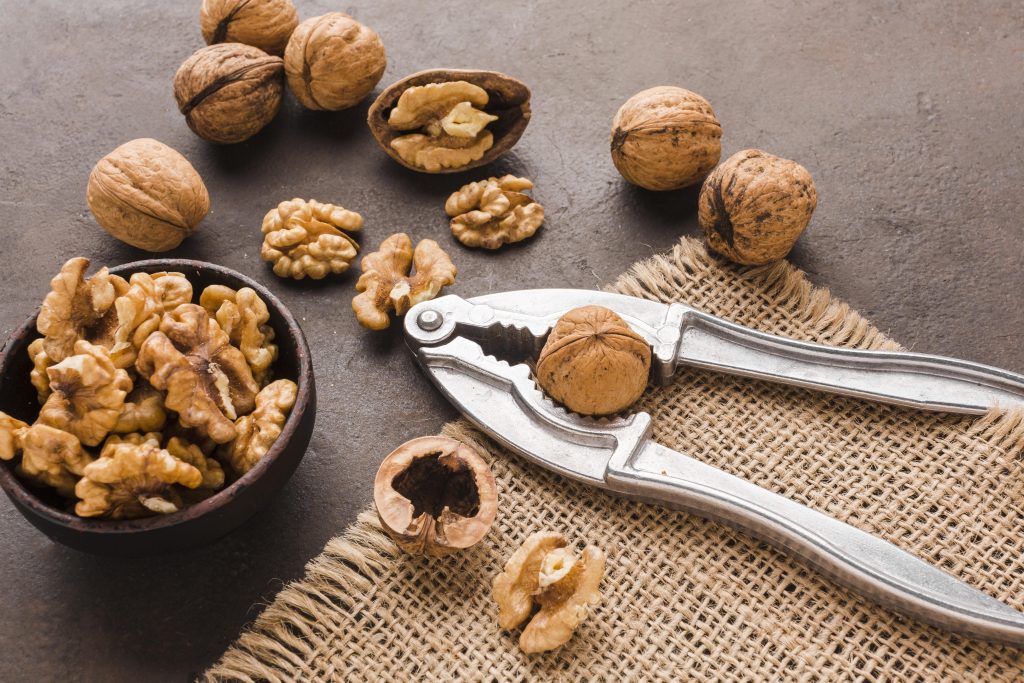
A nut cracker is required by a wide range of individuals and industries involved in food preparation, processing, and catering services. Below is a detailed explanation as per the Diploma in Hotel Management and Catering Technology syllabus approach:
🥜 Who is Required: Nut Cracker
1. Chefs and Cooks
- Hotel chefs, bakers, confectioners, and kitchen assistants require nut crackers to prepare various dishes.
- Used in hotel kitchens, bakeries, and catering establishments for:
- Cracking nuts for cakes, pastries, and desserts
- Preparing nut fillings, toppings, and garnishes
- Making nut-based sauces and pastes (e.g., almond paste, cashew cream)
2. Students of Hotel Management and Culinary Arts
- Students learning Food Production and Culinary Equipment must understand:
- How to use a nut cracker safely and effectively
- The principle of leverage behind its design
- Its role in food preparation and portion control
- Practical use is taught during foundation-level training in the kitchen lab.
3. Catering Industry Professionals
- Caterers and banquet kitchen staff use nut crackers for large-scale food preparation, especially for:
- Dessert stations
- Buffets and bakery sections
- Festive and traditional dishes requiring fresh nuts
4. Food Processing and Packaging Units
- In industrial food processing plants, nut crackers are required to:
- Crack nuts in bulk quantities
- Ensure uniform kernel size for commercial packaging
- Support nut-based product manufacturing such as chocolates, spreads, and health snacks
5. Confectionery and Bakery Owners
- Required for daily use in bakeries for:
- Preparation of almond flakes, cashew bits, or walnut pieces
- Adding texture and flavor to baked goods
- Maintaining product consistency
6. Housekeeping and Kitchen Equipment Managers
- Responsible for ensuring that tools like nut crackers are:
- Available in good condition
- Maintained and stored properly
- Replaced when worn out
They ensure smooth kitchen operations in hotels, restaurants, and institutions.
7. Small Entrepreneurs and Home Bakers
- Required by home-based food businesses, small confectionery producers, and nut vendors for:
- Cracking nuts in small batches
- Preparing handcrafted or organic nut-based products
8. Nutritionists and Culinary Researchers
- Used in food and nutrition labs for studying:
- Nut varieties and their hardness
- Nutritional properties of kernels
- Extraction of edible parts for diet planning or product development
✅ Summary
| Category | Purpose of Using Nut Cracker |
|---|---|
| Chefs & Cooks | Food preparation, garnishing, baking |
| Students | Learning food production equipment |
| Caterers | Large-scale menu preparation |
| Food Processors | Industrial nut shelling and packaging |
| Bakers | Ingredient preparation for desserts |
| Equipment Managers | Maintenance and tool management |
| Entrepreneurs | Home and small-scale nut processing |
| Researchers | Study of nut quality and nutrition |
When is Required Nut cracker
“The Nutcracker” is a famous ballet composed by Pyotr Ilyich Tchaikovsky. It is typically performed during the holiday season, especially around Christmas. The specific performance dates for “The Nutcracker” can vary by location and the performing arts organization.
If you’re interested in seeing a performance of “The Nutcracker,” I would recommend checking with local theaters, ballet companies, or performing arts organizations in your area to find out their specific showtimes and dates. Typically, performances of “The Nutcracker” are most common in November and December, with some extending into early January. Keep in mind that performance schedules can change from year to year, so it’s a good idea to check with local sources for the most up-to-date information.
Where is Required Nut cracker
The term “Nutcracker” can refer to two different things, as mentioned earlier:
- A Tool for Cracking Nuts: Nutcrackers are physical devices or tools used for cracking open the shells of nuts to access the edible nutmeat inside. Nutcrackers can be found in various places, including kitchens, households, and stores that sell kitchen utensils.
- A Ballet: “The Nutcracker” is a famous ballet composed by Pyotr Ilyich Tchaikovsky. It is typically performed in theaters and performance venues. The location of a performance of “The Nutcracker” can vary depending on the specific theater or performing arts organization that is staging the production. To attend a performance of “The Nutcracker,” you would typically need to check local theaters and performing arts venues for showtimes and locations.
If you are looking for a specific location or event related to either of these, please provide more context, and I can try to assist you further.
How is Required Nut cracker
A nutcracker is a tool designed for cracking open the hard shells of nuts to access the edible nutmeat inside. Here’s how you typically use a nutcracker:
- Select the Nut: Choose the type of nut you want to crack. Common choices include walnuts, pecans, almonds, and hazelnuts.
- Position the Nut: Place the nut in the jaws or the opening of the nutcracker. Make sure it’s centered and firmly held.
- Apply Pressure: Squeeze the handles of the nutcracker together. The serrated jaws or blades will exert pressure on the nut’s shell, causing it to crack open. Be careful not to squeeze too hard, as this can crush the nutmeat inside.
- Remove the Nutmeat: Once the shell is cracked, carefully open the nutcracker to access the cracked shell. Remove the nutmeat from the broken shell.
- Enjoy: You can now enjoy the edible part of the nut. Discard the shell fragments.
The exact method may vary depending on the type of nutcracker you are using, as there are different designs, including handheld nutcrackers, pliers-style nutcrackers, and more. It’s important to be cautious when using a nutcracker to avoid injuring yourself and damaging the nutmeat. If you are using a specialized nutcracker for a specific type of nut, follow any manufacturer’s instructions provided with the tool.
Case Study on Nut cracker
Title: Enhancing Nut Cracking Efficiency in a Nut Processing Facility
Introduction: A nut processing facility specializing in cracking and processing various types of nuts, such as almonds and walnuts, aimed to optimize their nut cracking process. They were using traditional handheld nutcrackers, and they wanted to increase efficiency, reduce labor costs, and minimize damage to the nutmeat during the cracking process.
Challenges:
- Inefficient Manual Labor: The facility relied on manual labor to crack nuts using handheld nutcrackers, which was a time-consuming and labor-intensive process.
- Nutmeat Damage: Manual cracking often resulted in nutmeat breakage and a higher level of damaged nuts, reducing the overall product quality.
- Inconsistent Results: Human variability led to inconsistent cracking, causing issues with product consistency and quality control.
Solution:
The facility decided to invest in an automated nut cracking system, which involved the following components:
- Automated Nutcrackers: They purchased and installed automated nutcracking machines designed for high-speed and precision cracking. These machines utilized robotics and advanced technology to apply consistent pressure on the nuts’ shells, reducing the risk of nutmeat damage.
- Quality Control Sensors: The system included sensors to detect the quality of the cracked nuts. Any nuts with damaged nutmeat were automatically separated from the good ones.
- Sorting and Packaging Equipment: The facility also upgraded their sorting and packaging equipment to handle the increased nut cracking output efficiently.
Results:
- Improved Efficiency: The new automated nut cracking system significantly increased the facility’s production capacity and efficiency. They were able to process more nuts in a shorter time, reducing labor costs.
- Enhanced Product Quality: With the reduction in nutmeat damage, the facility improved the quality of their nut products, leading to higher customer satisfaction and better market positioning.
- Consistent Product: The automated system ensured uniform cracking results, enhancing product consistency and reducing the need for additional quality control measures.
- Cost Savings: While the initial investment in automated equipment was significant, the facility ultimately saved on labor costs, reduced waste, and increased their overall profitability.
Conclusion:
By implementing an automated nut cracking system, this nut processing facility was able to address their challenges of inefficiency, nutmeat damage, and inconsistent results. The investment in technology led to improved production efficiency, enhanced product quality, and cost savings, ultimately strengthening their position in the market and ensuring long-term success.
Please note that this case study is fictional, and any real-world implementation of similar solutions would require thorough planning, investment, and careful consideration of the specific needs and circumstances of the facility.
White paper on Nut cracker
Abstract: Provide a brief summary of the white paper’s content and its significance.
Table of Contents:
- Introduction
- Define the purpose and scope of the white paper.
- State the relevance and importance of nutcrackers.
- History and Evolution of Nutcrackers
- Explore the historical origins and development of nutcrackers.
- Discuss the cultural and technological evolution of nutcrackers.
- Types of Nutcrackers
- Detail the various types of nutcrackers, including handheld, mechanical, and specialized nutcrackers.
- Explain the differences in design and use.
- Materials and Construction
- Discuss the materials traditionally used to make nutcrackers.
- Examine modern advancements in nutcracker materials and design.
- Usage and Maintenance
- Describe how to use nutcrackers effectively and safely.
- Provide tips for cleaning, maintaining, and storing nutcrackers.
- Nut Types and Cracking Techniques
- Explain the differences in cracking techniques for various types of nuts.
- Provide guidance on cracking common nuts, such as walnuts, almonds, and pecans.
- Nutcrackers in Popular Culture
- Explore the role of nutcrackers in literature, art, and holiday traditions, including “The Nutcracker” ballet.
- Discuss the collectibility and decorative aspects of nutcrackers.
- Nutcrackers in Culinary Applications
- Highlight the use of nutcrackers in food preparation and cooking.
- Share recipes or techniques where nutcrackers play a key role.
- Modern Innovations and Technology
- Investigate recent technological advancements and innovations in nutcrackers.
- Discuss smart kitchen appliances and their impact on nut cracking.
- Safety Considerations
- Emphasize safety precautions when using nutcrackers.
- Discuss potential hazards and how to avoid them.
- Environmental Impact
- Analyze the environmental implications of nutcracker materials and production.
- Suggest eco-friendly alternatives or practices.
- Conclusion
- Summarize the key takeaways and findings.
- Reiterate the significance of nutcrackers in modern society.
- References
- Cite sources, studies, and references used in the white paper.
Appendix (Optional):
- Include additional information, such as product reviews, case studies, or supplementary data.
Please note that a comprehensive white paper on nutcrackers would require in-depth research, detailed analysis, and relevant data. You can expand on each section, include images and diagrams, and provide a list of references to support your findings.
Industrial Application of Nut Cracker
Courtesy: Greens and Machines
A nut cracker—traditionally used to crack the hard shells of nuts like walnuts, almonds, and peanuts—also finds various industrial applications beyond household or culinary use. In industrial contexts, nut crackers are engineered machines designed for mass processing, efficiency, and quality control. Below are the main industrial applications:
1. Food Processing Industry
- Nut Shelling and Kernel Extraction:
Industrial nut crackers are widely used in the food processing industry for large-scale cracking of nuts such as almonds, cashews, walnuts, peanuts, hazelnuts, and pistachios. - Automation and Productivity:
Automated nut cracking machines increase productivity by cracking thousands of nuts per hour while minimizing kernel breakage. - Quality Sorting:
Integrated systems often include shell–kernel separators and graders, ensuring only the edible portion proceeds for roasting, coating, or packaging.
2. Confectionery and Bakery Industry
- Used to prepare raw materials (cracked nuts) for products like chocolates, cookies, energy bars, nut spreads, and desserts.
- Ensures uniform nut size for consistent texture and taste in final products.
- Helps in maintaining hygiene and quality standards through stainless steel, food-grade cracking machines.
3. Oil Extraction Industry
- Pre-processing Step:
In industries extracting oil from groundnuts, walnuts, or almonds, nut crackers serve as the first stage to break the shell and access kernels rich in oil. - Efficiency Improvement:
Proper cracking before pressing ensures higher oil yield and reduces wastage.
4. Agricultural Processing Units
- Used in agricultural cooperatives or farms for post-harvest nut processing.
- Helps farmers or processors prepare nuts for market or further processing industries.
- Reduces manual labor, increasing efficiency and profitability.
5. Biomass and Waste Utilization
- Cracked shells from nut processing are utilized in:
- Fuel briquettes
- Activated carbon production
- Animal feed additives
- Organic fertilizers and compost
Industrial nut crackers contribute to zero-waste processing, where even by-products are converted into valuable materials.
6. Laboratory and Research Applications
- Used in food technology labs to study:
- Shell hardness and kernel yield
- Nut quality and oil content
- Machine design and material handling characteristics
These insights help in developing better processing equipment and optimizing cracking techniques.
Conclusion
Industrial nut crackers play a crucial role in food processing, oil extraction, agriculture, and waste management. Their applications ensure high productivity, reduced labor, minimal kernel damage, and resource optimization, making them an essential tool in the modern agro-industrial sector.