

Telephone Procedures
Telephone procedures refer to a set of standardized guidelines and practices used to manage incoming and outgoing calls in a professional and efficient manner. These procedures ensure that all telephone communications within an organization are handled consistently, accurately, and courteously. In industries such as hospitality, healthcare, banking, and corporate services, well-defined telephone procedures are essential for maintaining effective communication, delivering quality customer service, and supporting smooth operational workflow.
In a professional environment, telephone communication is often the first point of contact between an organization and its customers or guests. Therefore, following proper telephone procedures helps create a positive first impression and establishes trust. These procedures typically include answering calls promptly, using a professional greeting, listening attentively, transferring calls correctly, taking accurate messages, and ending conversations politely.
Telephone procedures also play a crucial role in ensuring that information is communicated clearly and without errors. By following a structured approach to call handling, employees can reduce misunderstandings, avoid miscommunication, and improve overall efficiency. This is particularly important in hospitality settings, where guest requests, reservations, and complaints must be handled quickly and accurately to ensure customer satisfaction.
Modern telephone procedures are supported by advanced communication technologies such as Private Branch Exchange (PBX) systems, Voice over Internet Protocol (VoIP), and automated call distribution systems. These tools help organizations manage high call volumes, route calls to the appropriate departments, and improve response times. However, despite technological advancements, the role of human interaction remains essential in delivering personalized and empathetic customer service.
Effective telephone procedures also emphasize professionalism and etiquette. Employees are trained to speak clearly, maintain a polite tone, avoid interruptions, and demonstrate patience while dealing with callers. Active listening and accurate information sharing are key components of successful telephone communication. Additionally, confidentiality must be maintained when handling sensitive customer or organizational information.
In conclusion, telephone procedures form the foundation of effective communication within any organization. They ensure consistency, enhance customer experience, and support operational efficiency. By following standardized telephone procedures, organizations can improve service quality, strengthen customer relationships, and maintain a professional image in a competitive business environment.
#CustomerExperience
What are the standard telephone procedures followed in hospitality operations?
Standard telephone procedures in hospitality operations are structured guidelines that ensure all guest and internal calls are handled in a professional, consistent, and efficient manner. These procedures are essential in hotels, resorts, and other hospitality establishments where telephone communication plays a key role in guest service, reservations, and internal coordination. Proper telephone procedures help improve guest satisfaction, reduce communication errors, and maintain the hotel’s professional image.
Importance of Telephone Procedures in Hospitality
In the hospitality industry, telephone communication is often the first and most frequent point of contact between guests and the hotel. A well-handled call can create a positive impression, while poor communication can lead to dissatisfaction and loss of business. Standard procedures ensure that every call reflects the hotel’s service standards and commitment to quality.
Standard Telephone Procedures in Hospitality Operations
1. Prompt Answering of Calls
All incoming calls should be answered within three rings whenever possible. This demonstrates attentiveness, professionalism, and respect for the caller’s time.
2. Professional Greeting
Every call should begin with a standardized greeting that includes the hotel name, department (if applicable), and the staff member’s introduction.
Example:
“Good morning. Thank you for calling Sunrise Grand Hotel. This is Anjali speaking. How may I assist you today?”
3. Active Listening
Operators and front office staff must listen carefully to the caller without interruption. This ensures full understanding of guest needs, whether it is a reservation inquiry, complaint, or service request.
4. Accurate Information Handling
Staff must provide correct and updated information regarding room availability, rates, services, hotel facilities, and policies. If unsure, they should verify before responding.
5. Call Transfer Procedures
When transferring a call, staff should inform the caller before doing so and ensure the call is directed to the correct department.
Example:
“May I transfer your call to our reservations team for further assistance?”
6. Placing Calls on Hold
If necessary, callers should be placed on hold only after seeking permission. The staff must return within a reasonable time and thank the guest for waiting.
7. Message Taking
When the intended person is unavailable, detailed messages must be recorded, including caller name, contact details, time of call, and purpose. Messages should be delivered promptly.
8. Handling Guest Requests
Requests such as room service, housekeeping, wake-up calls, and maintenance should be recorded accurately and forwarded immediately to the relevant department.
9. Complaint Handling
Complaints must be handled with patience and empathy. Staff should listen carefully, apologize where appropriate, and escalate issues to supervisors if necessary.
10. Call Closing Procedure
Every call should end politely, confirming that the guest has no further questions and thanking them for contacting the hotel.
Example:
“Thank you for calling Sunrise Grand Hotel. We look forward to serving you. Have a pleasant day.”
Best Practices for Telephone Procedures
- Maintain a polite and calm tone throughout the call.
- Avoid interruptions while the caller is speaking.
- Use professional language at all times.
- Ensure confidentiality of guest information.
- Follow up on requests and complaints promptly.
Conclusion
Standard telephone procedures in hospitality operations are essential for delivering consistent and high-quality guest service. By following structured call-handling guidelines, hospitality professionals can ensure effective communication, improve guest satisfaction, and maintain the hotel’s reputation for excellence in customer service.
#ServiceIndustry
How should incoming and outgoing calls be handled professionally in a hotel setting?
Professional handling of incoming and outgoing calls is a critical function in hotel operations, as telephone communication often serves as the first and most frequent interaction between guests and the property. Proper call management ensures smooth communication, enhances guest satisfaction, and reflects the hotel’s commitment to high service standards. In the hospitality industry, every call must be treated as an opportunity to create a positive guest experience.
Importance of Professional Call Handling
Hotels rely heavily on telephone communication for reservations, guest services, internal coordination, and complaint resolution. Poorly handled calls can lead to misunderstandings, delays, and dissatisfaction, while professional call handling builds trust and strengthens the hotel’s reputation.
Handling Incoming Calls Professionally
1. Answer Calls Promptly
All incoming calls should be answered within three rings. A quick response shows attentiveness and professionalism.
2. Use a Standardized Greeting
Each call should begin with a courteous and structured greeting that includes the hotel name and staff introduction.
Example:
“Good evening. Thank you for calling Ocean View Hotel. This is Priya speaking. How may I assist you?”
3. Practice Active Listening
Allow the caller to speak without interruption. Focus on understanding the guest’s request clearly before responding or taking action.
4. Provide Accurate Information
Ensure that all responses regarding room availability, pricing, services, or policies are correct and up to date. If uncertain, verify information before responding.
5. Manage Call Transfers Efficiently
When transferring a call, always inform the guest and ensure the call is directed to the correct department.
Example:
“I will transfer your call to our reservations department for further assistance.”
6. Handle Hold Requests Properly
If placing a caller on hold is necessary, ask for permission first and return to the call promptly with an update.
7. Take Clear and Complete Messages
If the concerned person is unavailable, record accurate details such as name, contact number, purpose of the call, and time. Ensure timely message delivery.
8. End Calls Politely
Always conclude calls courteously, confirming that the guest has no further questions and thanking them for calling the hotel.
Handling Outgoing Calls Professionally
1. Prepare Before Making the Call
Gather all relevant information such as guest details, reservation data, or service requirements before placing the call.
2. Introduce Yourself Clearly
Start the call by identifying yourself and the hotel.
Example:
“Good afternoon, this is Rohan from Royal Crown Hotel calling regarding your reservation.”
3. Confirm the Recipient’s Identity
Ensure you are speaking to the correct person before sharing any sensitive or confidential information.
4. Communicate the Purpose Clearly
State the reason for the call in a clear and concise manner, whether it is confirmation, follow-up, or service coordination.
5. Maintain Professional Tone
Speak politely, clearly, and at a moderate pace. Avoid slang or informal language during all interactions.
6. Record Call Details
Document important information discussed during the call for future reference and operational continuity.
7. End the Call Professionally
Summarize the conversation, confirm any agreed actions, and close the call politely.
Example:
“Thank you for your time. We look forward to welcoming you. Have a great day.”
Best Practices for Professional Call Handling
- Answer calls promptly and consistently.
- Use standardized greetings and closing statements.
- Maintain a polite and calm tone throughout.
- Avoid interrupting the caller.
- Ensure confidentiality of guest information.
- Provide accurate and updated information.
- Document all important communication.
- Follow up on guest requests and concerns.
Conclusion
Professional handling of incoming and outgoing calls in a hotel setting is essential for delivering excellent guest service and maintaining operational efficiency. By following structured procedures, practicing effective communication, and maintaining a customer-focused approach, hotel staff can ensure positive guest experiences and strengthen the overall reputation of the property.
#FrontOfficeOperations
What is the correct procedure for transferring and putting calls on hold?
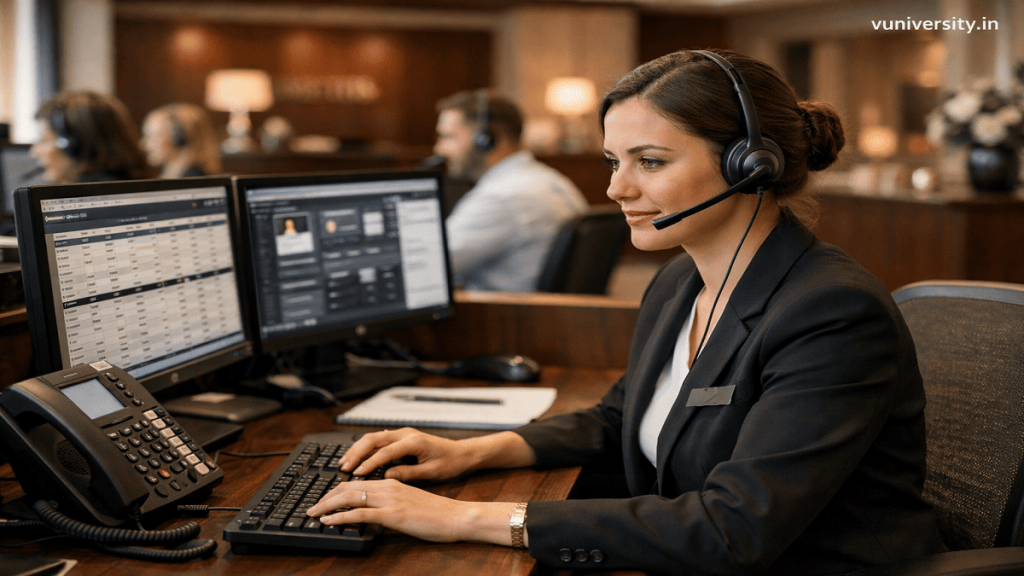
In hospitality and service-oriented industries, transferring calls and placing callers on hold are routine telephone operations that require professionalism, clarity, and courtesy. Proper handling of these procedures ensures smooth communication, minimizes guest frustration, and reflects the organization’s service standards. Incorrect handling, on the other hand, can lead to confusion, dissatisfaction, and poor guest experience.
Importance of Proper Call Handling
Call transfers and hold procedures are essential for directing guests to the right department, managing high call volumes, and ensuring efficient communication within the organization. When performed correctly, they help maintain professionalism, improve response times, and enhance overall customer satisfaction.
Procedure for Transferring Calls
1. Identify the Need for Transfer
Determine whether the caller’s request should be handled by another department or staff member, such as reservations, housekeeping, or maintenance.
2. Inform the Caller Clearly
Always inform the caller before initiating a transfer. Explain why the call is being transferred and where it will be directed.
Example:
“I will transfer your call to our reservations department for further assistance.”
3. Ensure Correct Department Selection
Verify that the call is being transferred to the appropriate extension or department to avoid repeated transfers and delays.
4. Brief the Receiving Department (When Possible)
Before completing the transfer, provide a brief summary of the caller’s issue to the receiving staff to ensure continuity of service.
5. Complete the Transfer Smoothly
Stay on the line until the receiving department accepts the call, if the system allows. Ensure the caller is not disconnected or left unattended.
6. Follow Up If Necessary
If the transfer is unsuccessful or the call returns, assist the caller further or redirect them appropriately.
Procedure for Placing Calls on Hold
1. Seek Permission First
Always ask the caller before placing them on hold.
Example:
“May I place you on hold for a moment while I check that information?”
2. Explain the Reason
Briefly inform the caller why the hold is necessary, such as checking availability or consulting another department.
3. Use Hold System Properly
Activate the hold function on the telephone system correctly to ensure the caller is not accidentally disconnected or overheard.
4. Keep Hold Time Minimal
Callers should not be left on hold for long periods. If the delay is extended, return to the call and provide an update.
5. Check Back Regularly
If the hold time exceeds a short duration, return to the caller and update them on the progress.
Example:
“Thank you for holding. I am still checking the information for you. May I continue to hold, or would you prefer a callback?”
6. Thank the Caller After Hold
Always acknowledge the caller’s patience once the call resumes.
Example:
“Thank you for waiting. I appreciate your patience.”
Best Practices for Call Transfers and Holds
- Always communicate clearly before transferring or placing calls on hold.
- Avoid unnecessary transfers between departments.
- Ensure accurate routing to the correct extension.
- Keep hold times as short as possible.
- Maintain a polite and professional tone throughout the interaction.
- Provide updates if delays occur.
- Ensure callers are never left unattended or disconnected unexpectedly.
Common Mistakes to Avoid
- Transferring calls without informing the caller.
- Placing callers on hold without permission.
- Leaving callers on hold for long periods without updates.
- Transferring calls to incorrect departments.
- Failing to follow up after unsuccessful transfers.
Conclusion
Proper procedures for transferring and placing calls on hold are essential for maintaining professionalism and delivering excellent customer service in hospitality and other service industries. By communicating clearly, minimizing wait times, and handling calls with courtesy, organizations can ensure a smooth communication process and enhance overall guest satisfaction.
#ProfessionalCommunication
How are guest messages and wake-up calls managed through telephone procedures?
Guest messages and wake-up calls are essential components of telephone operations in the hospitality industry. They play a key role in ensuring smooth communication, timely service delivery, and overall guest satisfaction. Proper management of these services requires accuracy, attention to detail, professionalism, and adherence to standard telephone procedures. When handled effectively, they enhance the guest experience and reflect the hotel’s commitment to high-quality service.
Importance of Managing Messages and Wake-Up Calls
Hotels operate in a fast-paced environment where guests may not always be available to receive calls or manage their own schedules. Telephone operators act as a communication bridge, ensuring that important messages are delivered promptly and wake-up calls are scheduled accurately. These services help guests stay informed, manage their time effectively, and enjoy a stress-free stay.
Managing Guest Messages
1. Receiving the Message
When a caller requests to leave a message, the telephone operator must listen carefully and ensure that all relevant information is captured without errors.
2. Recording Accurate Details
A complete message should include:
- Guest name
- Caller name
- Contact number
- Date and time of call
- Room number (if applicable)
- Purpose of the call
- Any specific instructions or urgency
Accuracy is essential to avoid miscommunication.
3. Confirming Information
Before ending the call, the operator should repeat the message back to the caller to confirm correctness.
Example:
“Let me confirm, you would like Mr. Sharma in room 205 to call you back at 6 PM, is that correct?”
4. Logging the Message
All messages should be entered into the hotel’s communication system or Property Management System (PMS) for tracking and record-keeping.
5. Delivering the Message Promptly
Messages must be delivered immediately to the concerned guest or department to ensure timely action. Delays in message delivery can lead to guest dissatisfaction or missed opportunities.
6. Ensuring Confidentiality
Guest messages may contain sensitive or personal information. Operators must handle all messages discreetly and share them only with authorized personnel.
Managing Wake-Up Calls
1. Receiving Wake-Up Call Requests
Wake-up calls are usually requested by guests via telephone or at the front desk. The operator must record the request accurately, including the time and guest details.
2. Recording Wake-Up Call Details
Important information includes:
- Guest name
- Room number
- Requested wake-up time
- Date of wake-up call
- Special instructions (if any)
3. Entering the Request into the System
Wake-up call requests should be entered into the hotel’s telephone or PMS system to ensure automated or manual scheduling.
4. Scheduling the Call
The operator must ensure that the wake-up call is set correctly and verified for accuracy. Some hotels use automated systems, while others rely on manual call execution.
5. Making the Wake-Up Call
At the scheduled time, the operator or system initiates the wake-up call using a standardized greeting.
Example:
“Good morning, this is your wake-up call from Sunrise Hotel. It is 6:00 AM. We wish you a pleasant day.”
6. Following Up if Necessary
If the guest does not respond, a second call or follow-up procedure may be initiated according to hotel policy to ensure guest safety and awareness.
Best Practices for Managing Messages and Wake-Up Calls
- Record all details accurately without assumptions.
- Repeat information for confirmation before ending calls.
- Enter requests immediately into the system.
- Maintain confidentiality at all times.
- Deliver messages promptly and reliably.
- Ensure wake-up calls are scheduled correctly and on time.
- Follow standardized scripts for wake-up calls.
- Keep clear communication between departments.
Common Mistakes to Avoid
- Incomplete or incorrect message recording.
- Delayed message delivery.
- Missed or incorrect wake-up call scheduling.
- Failing to confirm details with the caller.
- Breaching guest confidentiality.
Conclusion
The management of guest messages and wake-up calls is a critical function of telephone procedures in hospitality operations. These services require precision, professionalism, and strict adherence to communication protocols. By ensuring accurate message handling and timely wake-up calls, telephone operators contribute significantly to guest satisfaction, operational efficiency, and the overall quality of hotel service.
#CallHandling
What are the key guidelines for maintaining efficiency and etiquette in telephone communication?
Telephone communication remains a vital channel for customer interaction in industries such as hospitality, healthcare, banking, retail, and corporate services. Maintaining both efficiency and etiquette in telephone communication is essential to ensure clear information exchange, positive customer experiences, and smooth operational flow. Professional telephone behavior reflects the organization’s standards and directly influences customer satisfaction and brand reputation.
Importance of Efficiency and Etiquette in Telephone Communication
Efficiency ensures that calls are handled quickly, accurately, and without unnecessary delays, while etiquette ensures that communication remains polite, respectful, and professional. Together, they help organizations deliver high-quality service, reduce misunderstandings, and build strong customer relationships.
Key Guidelines for Efficient and Professional Telephone Communication
1. Answer Calls Promptly
Calls should be answered within two to three rings whenever possible. Prompt response demonstrates attentiveness, professionalism, and respect for the caller’s time.
2. Use a Standard Professional Greeting
Every call should begin with a clear and consistent greeting that includes the organization name and staff introduction.
Example:
“Good morning. Thank you for calling Grand Palace Hotel. This is Anita speaking. How may I assist you?”
3. Speak Clearly and Calmly
Maintain a moderate speaking pace, clear pronunciation, and a calm tone. Avoid speaking too fast, too softly, or using unclear language.
4. Practice Active Listening
Listen carefully without interrupting the caller. Focus on understanding their needs fully before responding or taking action.
5. Be Polite and Courteous
Always use respectful language such as “please,” “thank you,” and “may I assist you.” Courtesy helps build trust and positive rapport with callers.
6. Provide Accurate Information
Ensure that all information shared is correct and up to date. If unsure, verify details before responding to avoid miscommunication.
7. Handle Calls Efficiently
Avoid unnecessary delays, long holds, or repeated transfers. Aim to resolve queries during the first interaction whenever possible.
8. Use Hold and Transfer Procedures Properly
Always ask permission before placing a caller on hold and explain the reason. When transferring calls, ensure they are directed to the correct department smoothly.
9. Maintain a Positive Tone
Even in stressful situations, maintain a friendly and composed tone. A positive attitude improves customer experience and reduces conflict.
10. Record Messages Accurately
Take complete and precise messages, including caller details, contact information, purpose of call, and urgency. Deliver messages promptly.
11. Maintain Confidentiality
Protect all sensitive customer or organizational information. Do not share personal or confidential data with unauthorized individuals.
12. End Calls Professionally
Conclude every call politely by summarizing the conversation, confirming satisfaction, and thanking the caller.
Example:
“Thank you for calling Grand Palace Hotel. We appreciate your time. Have a wonderful day.”
Best Practices for Balancing Efficiency and Etiquette
- Combine speed with accuracy in call handling.
- Avoid rushing the caller while still minimizing delays.
- Stay calm under pressure during high call volumes.
- Use standardized scripts for consistency.
- Stay knowledgeable about services and policies.
- Continuously improve communication skills through training.
Common Mistakes to Avoid
- Interrupting the caller frequently.
- Speaking too quickly or unclearly.
- Providing incomplete or incorrect information.
- Leaving callers on hold for long periods.
- Using informal or unprofessional language.
- Failing to follow call-handling procedures.
Conclusion
Maintaining efficiency and etiquette in telephone communication is essential for delivering high-quality service and ensuring customer satisfaction. By combining professionalism, clear communication, active listening, and proper call-handling techniques, organizations can improve operational effectiveness and create positive and lasting impressions on every caller.
#HospitalityOperations
Case Study of Telephone Procedures
Introduction
Telephone procedures are essential for maintaining structured, professional, and efficient communication within hospitality organizations. They ensure that all incoming and outgoing calls are handled consistently, guest requests are recorded accurately, and internal coordination between departments remains smooth. This case study highlights how the implementation of standardized telephone procedures improved guest satisfaction and operational efficiency in a hotel setting.
Case Study Overview
Hotel Name: Emerald Bay Hotel (Hypothetical Case)
Department: Front Office – Telephone Operations
Situation: High call volume during peak tourist season leading to delays, miscommunication, and guest complaints.
During peak season, the hotel experienced a significant increase in incoming calls related to reservations, room service, transportation, and general inquiries. The lack of standardized telephone procedures initially resulted in long waiting times, missed messages, and inconsistent communication across departments.
Problems Identified
The management identified several key issues:
- Calls were not answered within a consistent time frame.
- Inconsistent greetings and lack of professional call structure.
- Incorrect or incomplete message recording.
- Frequent misrouting of calls between departments.
- Delays in responding to guest requests.
- Lack of proper documentation for follow-up actions.
These issues negatively impacted guest satisfaction and operational efficiency.
Actions Taken
1. Implementation of Standard Telephone Procedures
The hotel introduced standardized call-handling procedures, including:
- Mandatory greeting scripts for all staff.
- Defined response time (within three rings).
- Structured message-taking format.
- Proper call transfer protocols.
- Clear escalation procedures for complaints and emergencies.
2. Staff Training and Development
Front office and telephone operators underwent training on:
- Professional telephone etiquette.
- Active listening techniques.
- Handling difficult callers and complaints.
- Proper use of PBX and PMS systems.
- Emergency communication procedures.
3. Introduction of Communication Technology
The hotel upgraded its telephone system with:
- Automatic Call Distribution (ACD) for balanced call handling.
- Integrated Property Management System (PMS) for guest data access.
- Call logging features for monitoring and accountability.
- Voicemail support for missed calls.
4. Departmental Coordination
Clear communication channels were established between:
- Front office
- Housekeeping
- Room service
- Maintenance
- Concierge services
This ensured faster response to guest requests.
5. Monitoring and Quality Control
Management implemented regular call audits to evaluate:
- Response time
- Communication quality
- Accuracy of information
- Guest satisfaction feedback
Results Achieved
After implementing standardized telephone procedures, the hotel observed significant improvements:
- Reduced call waiting time by 40%.
- Improved accuracy in message handling.
- Faster response to guest requests.
- Fewer communication errors between departments.
- Increased guest satisfaction scores.
- Better staff coordination and accountability.
Guests appreciated the improved responsiveness and professionalism, resulting in positive reviews and increased repeat bookings.
Key Learnings
This case study highlights several important lessons:
- Standardized procedures improve consistency and service quality.
- Training enhances staff confidence and communication skills.
- Technology supports but does not replace professional etiquette.
- Clear coordination between departments is essential.
- Continuous monitoring ensures long-term improvement.
Best Practices Identified
- Answer calls promptly and professionally.
- Use standardized greetings and scripts.
- Record messages accurately and completely.
- Transfer calls correctly without delays.
- Maintain clear communication between departments.
- Handle complaints with empathy and professionalism.
- Use integrated systems for efficiency.
Conclusion
The implementation of standardized telephone procedures significantly improved operational efficiency and guest satisfaction at Emerald Bay Hotel. This case study demonstrates that well-defined communication protocols, combined with staff training and modern technology, are essential for delivering high-quality hospitality services. Effective telephone procedures ensure smoother operations, better coordination, and a consistently positive guest experience.
#CustomerServiceExcellence
White Paper on Telephone Procedures
Executive Summary
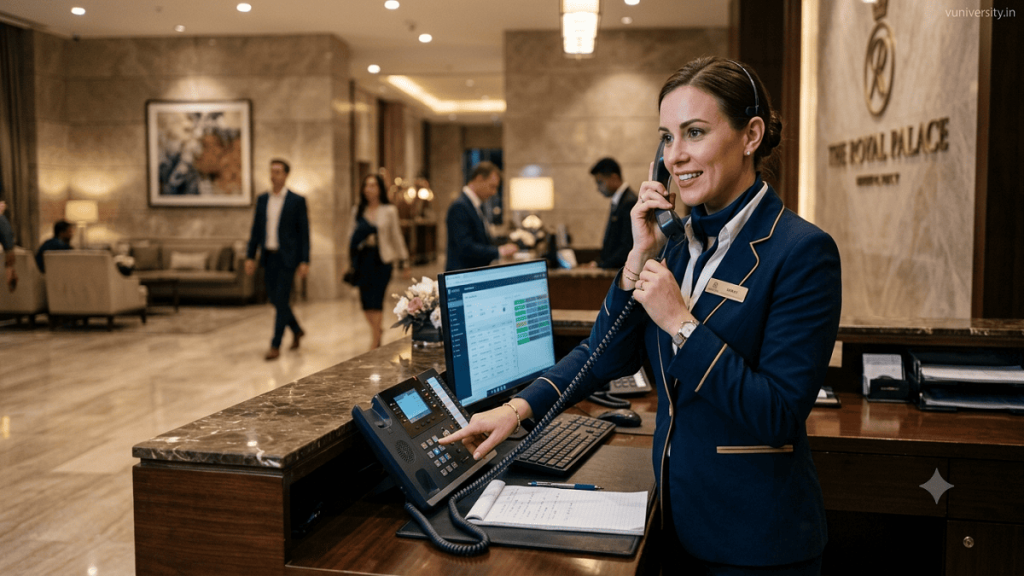
Telephone procedures form the backbone of structured communication in service-oriented organizations such as hospitality, healthcare, banking, retail, and corporate enterprises. These procedures define standardized methods for handling incoming and outgoing calls, ensuring consistency, professionalism, and efficiency in every interaction. In an era where customer experience is a key differentiator, well-designed telephone procedures contribute significantly to operational effectiveness and client satisfaction.
This white paper explores the importance of telephone procedures, core components, best practices, technological integration, industry applications, challenges, and recommendations for improving telephone communication systems.
Introduction
Telephone procedures refer to a set of standardized guidelines that govern how telephone calls are managed within an organization. They include protocols for answering calls, greeting callers, transferring calls, taking messages, handling inquiries, managing complaints, and responding to emergencies.
These procedures ensure that communication is consistent, efficient, and aligned with organizational service standards. They also help reduce errors, improve response times, and enhance the overall customer experience.
Importance of Telephone Procedures
Effective telephone procedures are critical for maintaining service quality and operational efficiency. Key benefits include:
- Ensuring consistent communication standards across staff.
- Improving customer satisfaction through prompt and accurate responses.
- Reducing communication errors and misunderstandings.
- Enhancing coordination between departments.
- Supporting professional brand image.
- Increasing efficiency in handling high call volumes.
- Strengthening customer trust and loyalty.
In customer-facing industries, telephone procedures often directly influence business reputation and service quality perception.
Core Components of Telephone Procedures
1. Call Answering Protocol
Calls should be answered within a defined timeframe, typically within two to three rings, using a professional and standardized greeting.
2. Call Handling Guidelines
Staff must follow structured steps including listening, verifying information, providing responses, and resolving queries efficiently.
3. Call Transfer Procedures
Calls should be transferred accurately to the appropriate department with prior notification to the caller and, when possible, briefing the receiving staff.
4. Message Management
All messages should be recorded accurately, including caller details, purpose, contact information, and urgency, and delivered promptly.
5. Hold Procedures
Callers should be placed on hold only with permission, with periodic updates provided if delays occur.
6. Complaint Handling Procedures
Complaints should be handled with empathy, professionalism, and escalation protocols when necessary.
7. Emergency Communication Protocols
Clear procedures must be in place for handling emergencies, ensuring immediate communication with relevant departments and authorities.
Best Practices in Telephone Procedures
- Answer calls promptly and professionally.
- Use standardized greetings and closing statements.
- Maintain polite and clear communication at all times.
- Practice active listening without interruption.
- Provide accurate and updated information.
- Avoid unnecessary call transfers and delays.
- Maintain confidentiality of sensitive information.
- Document all communication properly.
- Follow up on unresolved requests.
- Continuously train staff on communication skills.
Role of Technology in Telephone Procedures
Modern telephone procedures are supported by advanced technologies such as:
- Private Branch Exchange (PBX) systems
- Voice over Internet Protocol (VoIP)
- Interactive Voice Response (IVR) systems
- Automatic Call Distribution (ACD)
- Customer Relationship Management (CRM) integration
- Cloud-based telephony platforms
- Call recording and analytics tools
These technologies enhance efficiency, improve call routing, and enable better service monitoring and performance evaluation.
Industry Applications
Telephone procedures are widely used across various industries:
Hospitality
Managing reservations, guest services, room service requests, and complaints.
Healthcare
Scheduling appointments, patient communication, and emergency response coordination.
Banking
Handling account inquiries, financial services, and customer support.
Retail and E-commerce
Processing orders, customer queries, and after-sales support.
Corporate Sector
Internal communication, client coordination, and service management.
Challenges in Implementing Telephone Procedures
Organizations may face challenges such as:
- High call volumes during peak hours
- Inconsistent staff training
- Technology integration issues
- Communication breakdowns between departments
- Delays in message handling
- Difficulty maintaining service consistency
Addressing these challenges requires structured training and robust communication systems.
Recommendations
To improve telephone procedures, organizations should:
- Standardize call-handling protocols.
- Invest in staff training and development.
- Implement advanced telecommunication systems.
- Monitor call quality regularly.
- Encourage accountability and performance evaluation.
- Strengthen interdepartmental communication.
- Continuously update procedures based on feedback.
Conclusion
Telephone procedures are essential for ensuring consistent, efficient, and professional communication within organizations. When properly implemented, they enhance customer satisfaction, improve operational efficiency, and strengthen organizational reputation. By combining standardized processes, skilled personnel, and modern communication technology, organizations can deliver superior telephone service and maintain a competitive advantage in today’s service-driven environment.
#BusinessCommunication
Industry Application of Telephone Procedures
Telephone procedures are standardized communication guidelines that ensure every call within an organization is handled in a consistent, professional, and efficient manner. These procedures are widely applied across industries to improve customer service, streamline operations, and maintain high-quality communication standards. In today’s service-driven economy, telephone procedures remain a critical tool for ensuring smooth interaction between organizations and their stakeholders.
Importance of Telephone Procedures Across Industries
Telephone procedures help organizations maintain uniform communication standards regardless of employee or department differences. They reduce errors, improve response times, and enhance customer satisfaction. By following structured call-handling processes, businesses can ensure that every interaction reflects professionalism and reliability.
Industry Applications of Telephone Procedures
Hospitality Industry
In hotels, resorts, and travel organizations, telephone procedures are essential for managing reservations, guest inquiries, room service requests, wake-up calls, and complaints. Standardized procedures ensure that all guest interactions are handled promptly and courteously, enhancing the overall guest experience. They also help coordinate effectively between departments such as front office, housekeeping, and food and beverage.
Healthcare Industry
Hospitals, clinics, and healthcare centers rely on telephone procedures for appointment scheduling, patient inquiries, medical guidance, and emergency communication. Clear protocols ensure patient confidentiality, accurate information exchange, and timely response in critical situations, ultimately improving patient care and safety.
Banking and Financial Services
Banks and financial institutions use telephone procedures to manage account inquiries, transaction support, loan information, fraud reporting, and customer complaints. Strict procedures ensure security, confidentiality, and compliance with financial regulations while maintaining efficient customer service.
Retail and E-Commerce Industry
Retail businesses and online platforms depend on telephone procedures to handle product inquiries, order tracking, returns, complaints, and after-sales support. Structured call handling improves customer satisfaction and strengthens brand loyalty by ensuring quick and accurate responses.
Corporate and Business Organizations
In corporate environments, telephone procedures are used for client communication, internal coordination, meeting scheduling, and service support. They ensure smooth information flow between departments and help maintain professionalism in client interactions.
Education Sector
Educational institutions apply telephone procedures to manage admissions inquiries, academic support, examination schedules, and communication with students and parents. Proper procedures ensure clear and consistent communication across administrative departments.
Government and Public Services
Government agencies use telephone procedures to provide public information, handle service requests, manage complaints, and support citizen inquiries. Standardized communication improves transparency, accessibility, and efficiency in public service delivery.
Customer Service and Call Centers
Call centers are one of the most prominent users of telephone procedures. Agents follow structured scripts and protocols to handle large volumes of customer interactions, including technical support, sales assistance, complaint resolution, and service inquiries. These procedures ensure consistency and performance tracking.
Benefits of Telephone Procedures in Industry Applications
- Improved customer satisfaction through consistent communication
- Faster response times and reduced waiting periods
- Enhanced accuracy in information sharing
- Better coordination between departments
- Increased operational efficiency
- Stronger organizational reputation
- Improved compliance and data security in regulated industries
Best Practices for Industry-Wide Implementation
- Standardize call handling procedures across departments
- Train employees regularly on communication skills
- Integrate modern telecommunication technologies such as VoIP and CRM systems
- Monitor call quality and performance metrics
- Ensure confidentiality and data protection
- Continuously update procedures based on feedback and industry changes
Conclusion
Telephone procedures play a vital role across multiple industries by ensuring structured, efficient, and professional communication. From hospitality and healthcare to banking, retail, and government services, standardized telephone practices improve service quality, enhance customer experience, and support operational effectiveness. Organizations that implement strong telephone procedures are better positioned to deliver consistent, reliable, and customer-focused communication in an increasingly competitive environment.
#TelephoneProcedures
Ask FAQs
What are telephone procedures?
Telephone procedures are standardized guidelines used by organizations to manage incoming and outgoing calls efficiently and professionally. They include call answering, transferring, message taking, handling inquiries, and managing complaints.
Why are telephone procedures important in industries?
Telephone procedures are important because they ensure consistent communication, reduce errors, improve response time, and enhance customer satisfaction across industries such as hospitality, healthcare, banking, and retail.
How do telephone procedures improve customer service?
They improve customer service by ensuring that calls are handled quickly, information is accurate, communication is professional, and customer requests are directed to the correct department without delay.
Which industries commonly use telephone procedures?
Industries such as hospitality, healthcare, banking, retail, education, government services, and corporate organizations widely use telephone procedures to maintain effective communication and service quality.
What are the key elements of telephone procedures?
Key elements include call answering protocols, professional greetings, call transfers, message handling, hold procedures, complaint management, and emergency communication guidelines.
Source: Business Training Media
Table of Contents
Disclaimer: This content is for educational and informational purposes only. Telephone procedures may vary depending on organizational policies, industry standards, and operational requirements. Readers should refer to their respective workplace guidelines for exact protocols.